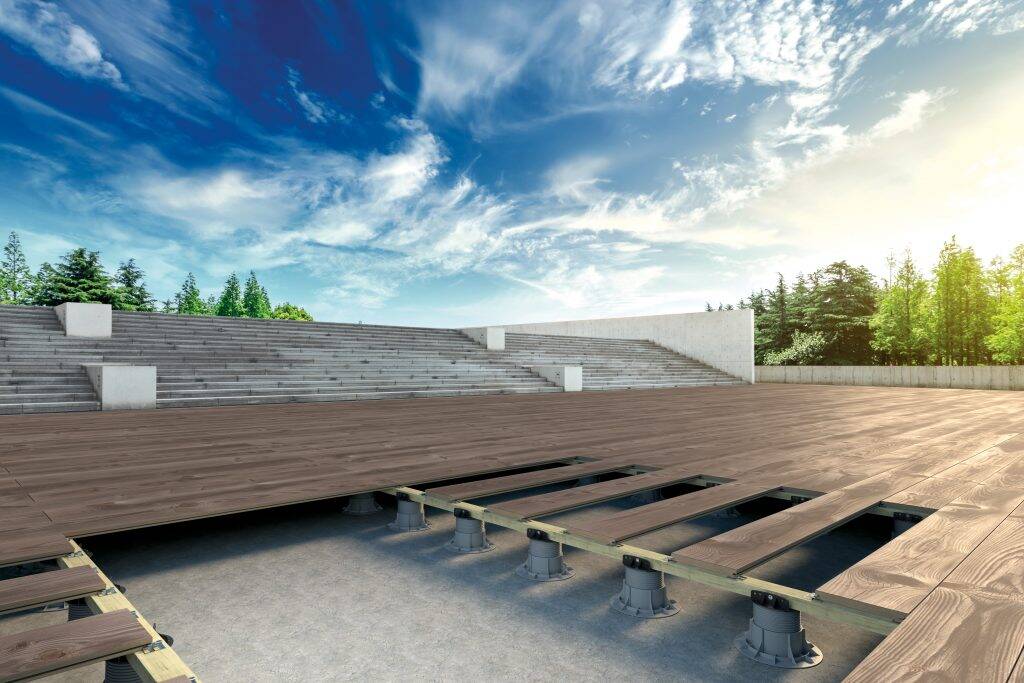
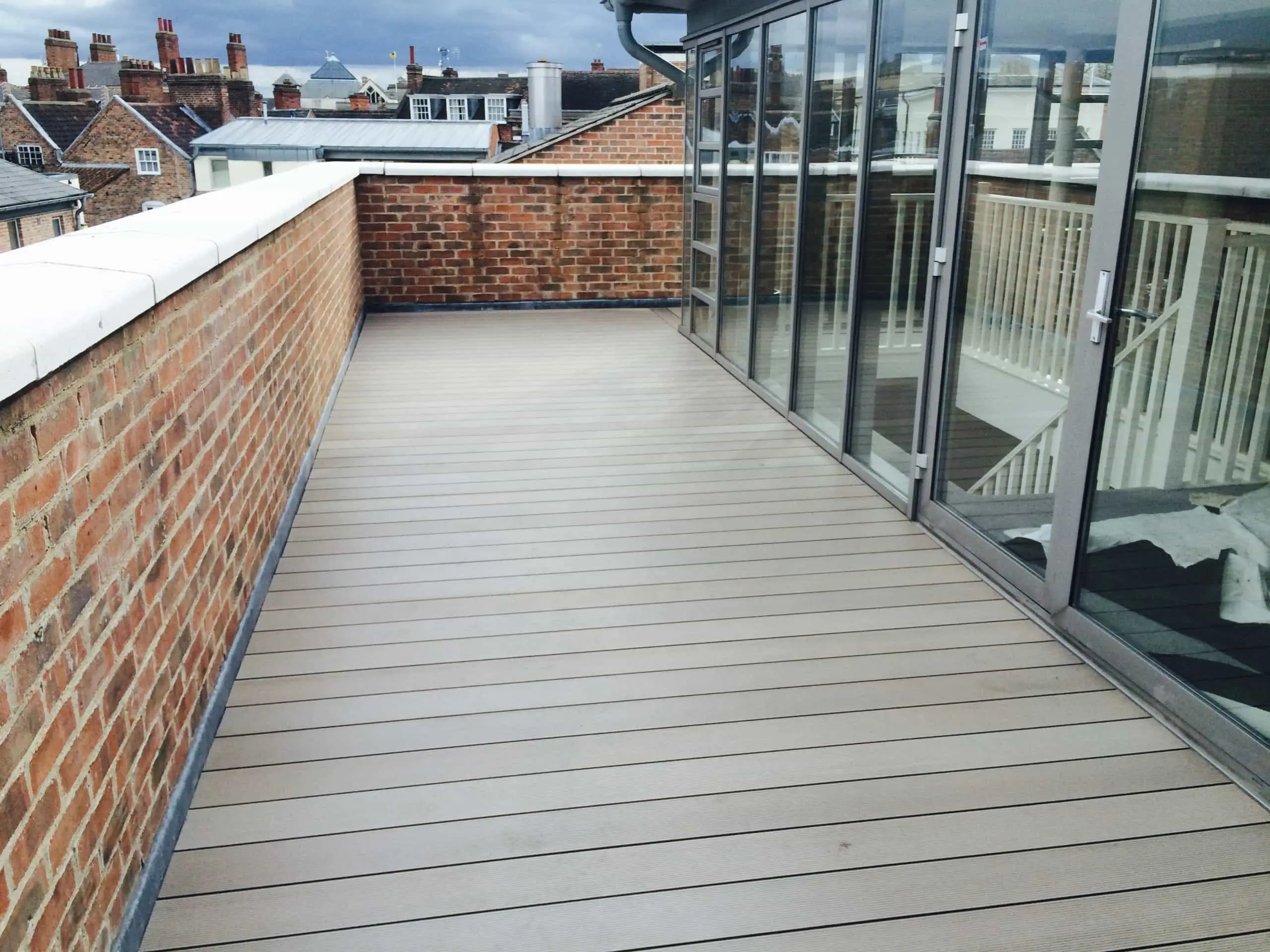
Making the most of your outdoor space is not limited to your garden. A roof terrace can be a wonderful addition to your home and give you additional space with a whole new perspective.
Whether you want to enjoy expansive views or want to make the most of limited space, roof terrace decking can be a perfect solution.
A well-constructed roof terrace can also value your home, making it a worthy investment for people who want to enjoy their property’s potential with one eye on the future.
We have looked at how composite decking can provide a level of safety for your outdoor living space and offer a low-maintenance alternative to traditional hardwood decking.
Why Choose Composite Decking for a Roof Terrace?
Roof terraces provide valuable outdoor space, particularly for properties with limited garden areas. Whether used for relaxing, dining or enjoying the view, choosing a practical decking surface is important.
Composite decking offers several advantages for these exposed outdoor spaces:
- Low maintenance: No routine painting, staining or sealing.
- Moisture resistance: Designed to withstand outdoor conditions without the regular treatment required by timber.
- Slip resistance: Textured boards can provide good grip in wet conditions, depending on the product.
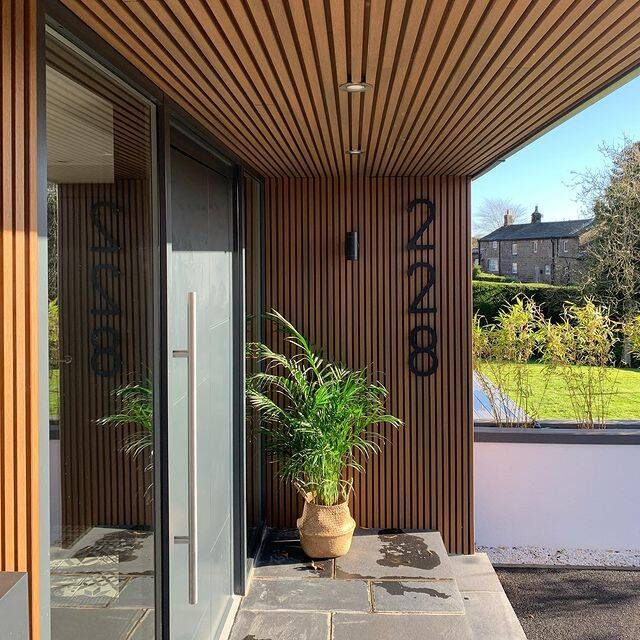
- Appearance: Available in a variety of colours and finishes to complement the property.
- Durability: Suitable composite boards can provide long-term performance when correctly specified and maintained.
These qualities make composite decking worth considering for roof terraces where regular maintenance may be inconvenient.
What is Composite Decking?
Composite decking is a great alternative to traditional wooden decking. It is made using plastic composites and recycled hardwood fibres.
This process guarantees a long-lasting, low-maintenance material that is perfect for decking projects.
Safety Features of Composite Decking
Composite deck boards have qualities that make them a safe choice for roof terracing. These qualities include;
Slip Resistance
The non-slip qualities of composite deck boards make them ideal for installation in the UK. As any UK resident knows, good weather is never guaranteed.
Even in wet weather, composite terrace decking boards are slip resistant and offer property owners additional peace of mind when using them.
Aluminium decking is sometimes used, but it can be very slippery when wet or icy, making it a poor choice for a roof terrace project. The slip resistance of composite decking is a significant factor in its popularity.
Non-Splinter
Composite deck boards don’t slit and splinter. This is great news for people that enjoy walking barefoot, have kids that use the decking, or have pets.
Hardwood decking can look great, but the maintenance and risk of splintering can make it a risky choice.
Rot and Mould Resistance
The rot and mould resistance of composite deck boards is another benefit that sets them apart from traditional hardwood decking.
The cost and inconvenience of having to regularly treat wooden decking to protect it from rot or mould are expensive and time-consuming.
You won’t need to worry about the integrity of the decking underfoot, thanks to its long guarantee and durability.
Benefits of Composite Decking
As well as providing the safety features mentioned above, there are a number of other benefits that make composite terrace decking a wise choice. The most significant benefits of composite decking include:
Low-Maintenance
Having low-maintenance composite decking boards might seem like an added bonus, but when you consider the time and money it can save you, it becomes a significant selling point.
Real wood decking requires regular maintenance. Cleaning and treating the decking boards can be time-consuming, and you also have to factor in the costs of the materials you need to do this.
Failure to properly maintain wooden decking can result in the boards’ warping, splitting, and splintering. Rot, mould, and pests like woodworm also need to be avoided.
Composite decking options need minimal maintenance. This saves you a significant amount of time and greatly reduces maintenance costs.
Appearance
If you are spending a lot of money on building materials and installation, you will want your decking boards to look good.
Composite decking that is made with plastic composites and recycled hardwood offers slip-resistant, durable decking boards that look great.
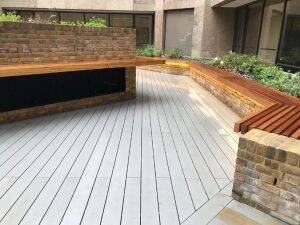
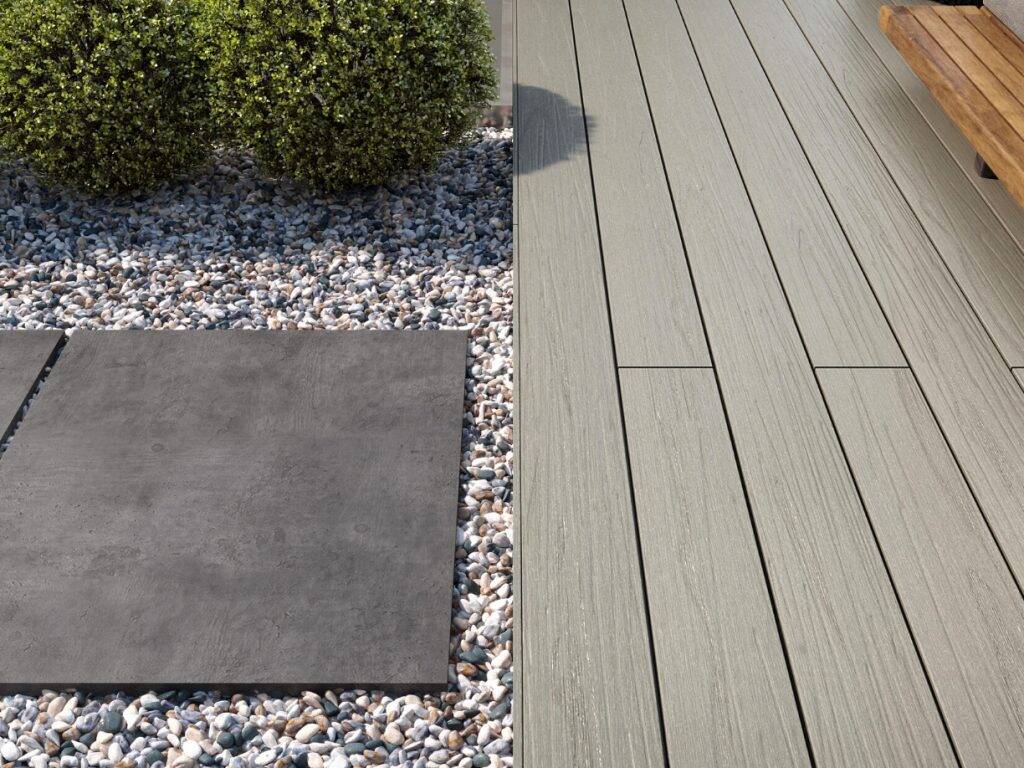
Available in a variety of colours, many options include a wood grain finish that mimics natural timber. Alternatively, you will be able to choose a wide groove pattern for a smart, uniform look.
Durability
Composite decking boards are extremely hard-wearing and durable. Even with a high-maintenance care regime, wooden decking boards are unlikely to last anywhere near as long as composite terrace decking.
Guarantees from 20 to 25 years are commonplace for high-quality composite decking boards. Annual cleaning and sweeping to remove debris will improve the lifespan of your decking.
Installation
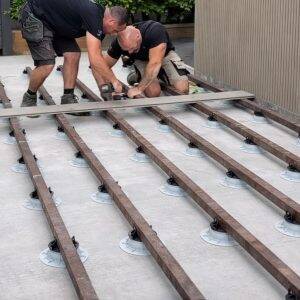
The installation time for your decking system will differ depending on the size and complexity of the job. Thankfully, composite decking is relatively straightforward for professionals to install.
A roof terrace can be quite a large project, from start to finish. Speaking with a professional and allowing them to see the property will allow them to give you further information about installation timescales and costs.
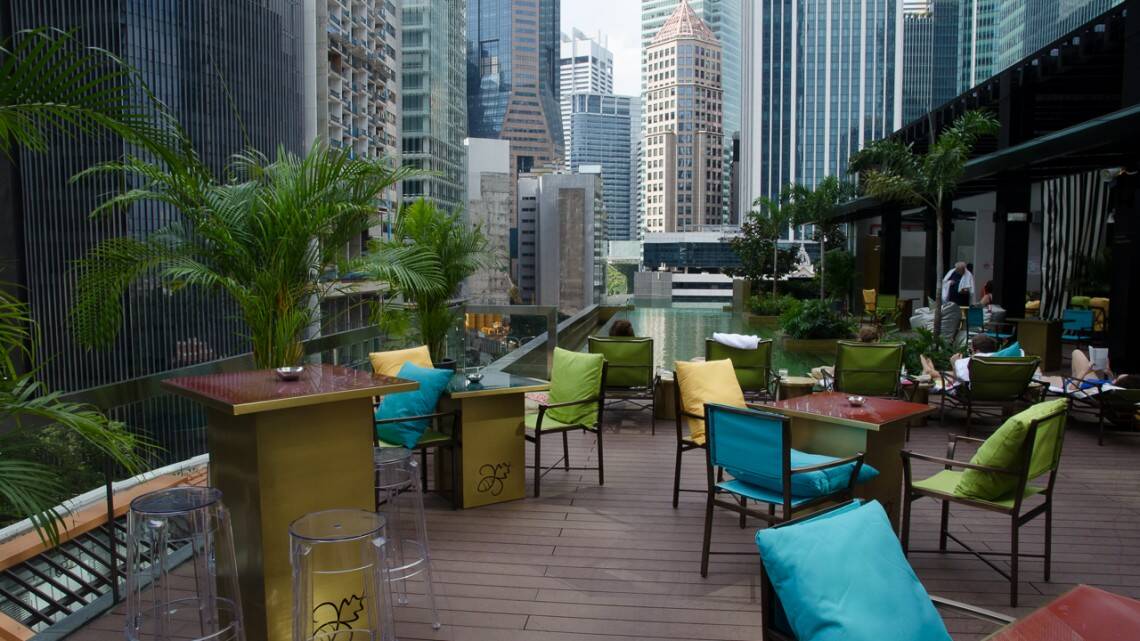
Why Composite Decking is Perfect for Roof Terrace Decking
It is important to understand that composite decking is a blanket term, and there are different suppliers and composite types to choose from.
Ensuring you buy from a high-quality supplier means the composite you get will be of a better standard.
The composite available from Ecoscape provides a number of benefits against competitors, including long warranties. All our products are tested to BS EN 15534 – wood polymer composite (WPC).
You will be able to choose between the brand’s Clarity composite decking, which offers a 20-year warranty and wonderful anti-slip properties.
Alternatively, Forma composite decking has a 25-year warranty, offers even greater durability, and comes with a colour guarantee to protect against fading.
Because a roof terrace can often be open to the elements, choosing a deck board material that does not rot and lasts for a long time is essential.
All Ecoscape decking undergoes slip resistance testing to guarantee its safety. This is especially comforting for property owners that are interested in roof terraces.
Ecoscape also specialises in an extensive range of balustrades that can perfectly match your decking, adding that extra level of security for you and your family.
Balustrades for Roof Terraces
Balustrades are an important consideration for roof terraces, particularly where there are exposed edges or changes in height.
They can also influence the appearance of the finished space. Glass, metal and composite balustrades offer different styles, allowing homeowners to choose a finish that complements their decking.
Ecoscape offers a range of balustrade options, including systems designed to coordinate with its composite decking.
For more information about the different designs and their applications, see our guide to composite balustrades and their uses.
FAQs
Is planning permission needed for a rooftop terrace?
Yes, planning permission is typically required for building a rooftop terrace in the UK.
You should always check with any local planning authority before committing to any work.
One of the most important considerations will be the impact a roof terrace has on your neighbours. This includes overshadowing and overlooking a neighbouring property.
If your roof terrace is in danger of invading the privacy of neighbours, including plans to use frosted glass or installing privacy screens will show you have given due consideration to neighbouring properties.
Checking for local examples of similar work that has set precedence can improve the chances of your application being improved.
Are covers allowed on a roof terrace?
Adding plans for a roof or covering in your initial plans is advised. This way, it can save time and let you know from the start what is or isn’t permitted in your local area.
If you are looking for additional shading, there is a range of options available to you, including;
- A Patio Umbrella – A removable patio umbrella is a great way to enjoy some fresh air without being exposed to the sun. You will be able to put it up and take it down when needed to protect it from high winds.
- Gazebo – A gazebo offers similar protection that a patio umbrella might, but on a larger scale. The open sides ensure it remains fresh and airy, but the cover protects from the sun and rain.
- Canopy – Depending on the size of your roof terrace, a semi-permanent canopy structure will allow you to stretch fabric over a framework that isn’t obtrusive.
- Pergola – Similar to a canopy frame, a pergola includes metal or wooden slats that provide shade. A canopy can be used across a pergola for full cover.
- Awning – Installing an awning can provide shade and add some architectural design. You will be able to choose from permanent, solid awnings, fabric awnings, or retractable awnings that give you more versatility.
- Shade Sail – A shade sail is a low-cost option that sees a flexible fabric stretched between anchor points. It provides shade and is a great option for those concerned about budget.
Additional cover on a roof terrace can help to protect your decking and balustrades, as well as any furnishings you install.
How do you clean a composite rooftop terrace?
While composite decking boards require significantly less maintenance than other materials, it still needs to be cleaned.
Cleaning composite decking on a terrace is relatively straightforward and will help to prolong its life and maintain its safety.
Regularly brushing debris and dirt from your decking will make cleaning easier. After the loose dirt has been swept, clean the decking with warm soapy water and spray it down with a hose to help it stay in good condition.
You should always try to dry after cleaning, and removing standing water after rain will help with its slip resistance.
How much weight can rooftop composite decking hold?
The weight of rooftop composite decking hold will differ depending on the exact boards and supplier you choose. Please ask a member of the Ecoscape team or review our composite decking and composite balustrade technical specifications.
The subframe and construction will also play a part in this, so checking with the supplier and installation team is advised.
Composite decking is known for being strong and will be able to withstand the weight of people and furniture.
Barbecues will be supported by decking, and the majority of hot tubs should be as well. We would recommend reducing the centres of the substructure in areas where heavy items like tables or hot tubs will be situated. You should consult a structural engineer or building control.
If you are planning to install a hot tub on a roof terrace, you should first find out the exact weight and dimensions of the tub. You will then have to work out the weight of it when full.
You will then be able to work out how many pounds per square foot the hot tub exerts on the decking when in use.
Always provide the supplier and installer with your full intentions for the area so they can advise you accordingly.
What is the difference between a roof terrace and a balcony?
The main differences between a terrace and a balcony are typically the location and use.
A terrace will usually be found on or beside a building. They are typically public spaces that are accessed from a public indoor room, and they are usually spacious, open designs.
A balcony will typically be a more private area and can be accessed from public or private rooms like bedrooms. They are found attached to the sides of buildings and are enclosed by walls or railings, and they are usually small and narrow spaces.
Both Balconies and terraces are excellent ways to expand living areas and make the most of typically unused space.
Final Thoughts
Low-maintenance composite decking is a great choice for property owners. Installing a roof terrace will be expensive, but there are many benefits that make it a worthwhile investment.
In monetary terms, adding a roof terrace will typically increase the value of a property by between 5% and 15%. This will be influenced by the area, view, quality of installation, and materials used.
Composite decking by Ecoscape offers high-quality decking boards with guarantees of up to 25 years. The long-lasting, durable deck boards pass stringent quality control and are a great option for anyone trying to reduce their carbon footprint.
Ecoscape Clarity deck boards are made from 45% recycled HDPE, and 55% of the wood fibres used are reclaimed, making them a great environmentally friendly choice.
The time, cost, and inconvenience of oiling and staining hardwood decking options are non-existent with composite decking. You won’t need to worry about boards splitting, rotting, or splintering, and this offers property owners with children or pets great peace of mind.
The high slip resistance provides another important safety feature. Anyone thinking about installing roof decking in the UK will have to consider the weather. Being able to walk on decking, even after it has rained safely, should be something that everyone can enjoy.
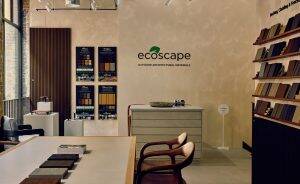
Getting a free sample of the decking available at Ecoscape is the perfect way to ensure you get the colour and finish you want for your roof terrace decking.