Composite decking’s main advantages are that it needs very little upkeep, lasts well, resists rot and splintering, and keeps its looks for years. The main drawbacks are that it costs more than timber at the start, darker boards can get hot in strong sun, and you can’t easily change the colour once it’s down.
For many UK homeowners, it’s a great alternative to timber, especially if you want a smart garden without staining, sealing or treating wood every year.
At Ecoscape, we develop and supply composite decking and the systems that go with it. Below, we explain the pros, the cons and why composite works so well in British gardens.
Composite Decking Pros and Cons at a Glance
| Pros | Cons |
|---|---|
| Very low upkeep, with no staining or sealing | Costs more upfront than basic timber |
| Resists rot, decay and wood-boring insects | Darker boards can get hot in strong sun |
| Hard-wearing and much less likely to splinter | You can’t usually paint or stain it a new colour |
| Made to cope with UK weather | |
| Wide choice of colours and finishes | |
| Many boards use recycled materials | |
| Capped boards add an extra protective layer | |
| Lower upkeep costs over the years |
Its biggest appeal is that it lasts, looks good and saves you work. Fit it well, clean it now and then, and it will give you a smart outdoor floor for many years.
What Are the Advantages of Composite Decking?
1. Very low upkeep, with no staining or sealing
The biggest plus of composite decking is how little care it needs compared with timber.
Wooden decking may need staining, sealing or treating from time to time to keep it in good shape. Composite decking doesn’t. For most people, upkeep just means clearing leaves and giving it a clean now and then.
After a wet winter, a thin film of green algae or dirt can build up, mostly in shady spots. You’ll see this on paving and stone too. It doesn’t mean the boards are wearing out.
Warm water, a mild detergent and a soft brush are usually all you need to freshen it up for spring. For more tips, read our guide on how to clean composite decking.
The result is simple: less time looking after your deck and more time enjoying your garden.
2. Hard-wearing, and resists rot, splintering and insects
Composite decking blends wood fibres with plastic to make boards that are built to live outdoors.
Unlike timber, it’s highly resistant to rot, decay and wood-boring insects. It’s also far less likely to split or splinter. That makes it a good fit for family gardens, seating areas and decks that get a lot of use.
Good-quality composite decking can last for decades if it’s fitted and cared for properly. How long it lasts depends on the board, where it’s used and the frame beneath it.
Ecoscape decking comes with long warranties for home use. The exact terms depend on the range you choose.
The board is only part of the story. The frame, fixings and drainage also affect how well your deck lasts.
3. Made for British weather
The UK’s changeable weather is one of the best reasons to choose composite decking.
Rain, frost, summer sun and swings in temperature are all hard on outdoor materials. Composite decking is made to cope with them, and it avoids most of the damp problems that timber suffers.
Because it resists rot, it suits wet spots well. Capped boards add an extra layer that keeps out moisture and stains. So you can use your deck all year round.
As with any deck, good drainage and airflow underneath will help it last.
4. Less splintering, with non-slip finishes
Composite decking is a practical choice for gardens used by children, pets and guests.
It’s far less likely to splinter, so it stays comfortable underfoot. Many boards also have a textured or grooved surface for better grip. Grip varies from board to board, so check the slip test results for the one you choose.
No outdoor deck is fully slip-proof. Wet leaves, algae and ice affect grip on any surface. Keeping the deck clean and letting water drain away helps keep it safe all year.
5. Great colours and a consistent finish
Composite decking gives you lots of choice when you plan your garden.
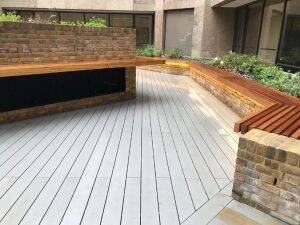
Boards come in wood-effect finishes, textures and modern colours, from natural wood tones to greys and darker shades.
Timber’s grain, knots and colour can vary a lot. Composite boards look the same from one end of the deck to the other.
Many systems also use hidden fixings, so there are no screw heads on show. Capped boards have an extra surface layer that helps them keep their looks with very little care.
Whether you want a classic garden deck or a modern outdoor room, the range of finishes makes it easy to get the look you want.
6. Good long-term value, with recycled materials
Composite decking often costs more than treated softwood at the start. But because it needs so little care, it can save you money over time.
Timber may need treating, staining and refinishing from time to time. Composite decking avoids most of these costs. If you’re planning a deck to last, that can make it a sound investment.
Many composite boards also use recycled plastics and reclaimed wood fibres. At Ecoscape, using recovered materials is a key part of how we make our products. It cuts the need for new raw materials and gives waste a second life.
A deck’s overall impact on the environment also depends on how it’s made and transported, how long it lasts and how it’s disposed of. So recycled content is just one part of the picture.
What Are the Disadvantages of Composite Decking?
Composite decking has lots of plus points, but there are three things worth knowing before you buy.
1. Costs more upfront than timber
Composite decking usually costs more at the start than basic treated softwood. Capped boards can cost more again, because of their extra protective layer. But the price you pay at the start is only part of the cost.
Timber may need treating and refinishing from time to time, while composite decking mostly avoids these costs. Over the years, the savings on upkeep can help balance out the higher price.
2. Darker boards can get hot in strong sun
Like timber, paving and other outdoor surfaces, composite decking soaks up heat in strong sunshine.
Darker boards get hotter than lighter ones and can feel uncomfortable underfoot on very hot days. Bear this in mind for south-facing gardens and spots with little shade.
A lighter colour or some shade in your design can help. For more detail, read our guide on how composite decking performs in full sun.
3. You can’t easily change the colour
Unlike timber, composite decking isn’t made to be painted, stained or refinished in a new colour.
The colour is built into the board, or into its protective outer layer, when it’s made. So the colour you choose is the one you’ll keep for the life of the deck.
That’s why it pays to take your time choosing a colour that suits your home and garden. Look at real samples outside, in both sunlight and shade, before you decide.
How Does Composite Decking Perform Throughout the Year?
A key plus of composite decking is that it copes with every season without yearly treatments.
From wet winters to warm summers, it’s built to stay outside all year.
| Season | How composite decking copes | What to do |
|---|---|---|
| Spring | Resists damp and decay, and needs no staining or sealing | Clear winter debris and any algae |
| Summer | Stands up to everyday use | Add shade in sunny spots and check how hot the boards get on hot days |
| Autumn | Resists rot, even in heavy rain | Sweep away fallen leaves |
| Winter | Copes with normal cold and wet weather when fitted correctly | Keep drainage clear and take care in frost or ice |
In most gardens, a clean after winter and a sweep now and then are all it needs.
Under trees or in deep shade, you may need to clean it more often, mainly where leaves build up.
Does the Type of Composite Decking Make a Difference?
Yes. All composite decking shares the same main benefits, but how a board is made affects its look, how well its surface is protected and its price.
The main choice is between uncapped and capped boards.
Uncapped composite decking
Uncapped boards are made from a blend of wood fibres, plastic and additives, with no extra outer shell.
They give you the main benefits of composite, including low upkeep and good resistance to rot. Ecoscape Clarity composite decking, for example, is an uncapped wood-plastic composite board.
Uncapped boards often cost less, while still needing far less care than timber.
Capped composite decking
Capped boards have an extra protective plastic layer bonded on when they’re made, usually by a process called co-extrusion.
This outer layer gives extra protection against stains and moisture. Ecoscape Forma capped composite decking is one example.
Capped boards suit homeowners who want extra surface protection and a finish that lasts.
What about solid and hollow boards?
Composite boards come in solid and hollow versions. Solid boards are solid all the way through. Hollow boards have channels inside, which use less material and make them lighter.
Both work well when fitted to the maker’s instructions. The right choice depends on where the deck is going, how it will be used and how strong the board needs to be.
What Should You Consider When Installing Composite Decking?
Choosing the right board matters, but fitting it properly matters just as much.
Composite boards expand and shrink a little as the temperature changes. This is normal, and the right gaps and fixings allow for it.
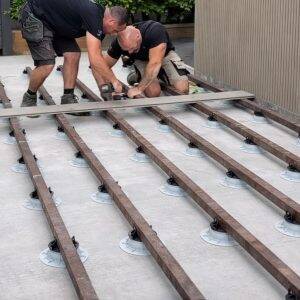
Each maker sets out the gaps, joist spacing and fitting steps for its boards. Drainage and airflow under the deck are also important, mainly where it gets a lot of rain.
At Ecoscape, we make the decking and the systems that go with it. So we know how much the whole build matters, not just the boards you can see.
The right decking substructure, matching fixings and decking trims and accessories help you get a solid, professional finish.
Practical advice: before choosing your decking, think about where it will go, how much sun it gets and what kind of frame it needs. These choices can make as much difference to the finished deck as the board’s colour and look.
Is Composite Decking Worth It?
If you want an outdoor floor that lasts, looks good and needs little care, composite decking is often well worth it.
Its biggest plus is that it lasts and saves you work, with none of the staining, sealing and refinishing that timber needs. Treated wood is still a sensible choice if the lowest upfront cost or a natural wood look matters most.
But for a deck you want to enjoy for years with little upkeep, composite decking makes a strong case. Choosing the right board, colour and frame from the start will give you the best result.
Frequently Asked Questions
How long does composite decking last?
Good-quality composite decking can last for decades if it’s fitted and cared for properly. How long depends on the board, the conditions, the fitting and the frame beneath it.
A maker’s warranty gives extra peace of mind, but it isn’t a promise of how long the deck will last.
Is composite decking slippery when wet?
Many composite boards have a textured or grooved surface for good grip.
But grip varies between boards, and leaves, algae or ice can make any outdoor surface slippery. Choose the right board and keep it clean.
Does composite decking need cleaning?
Yes, but far less than timber.
A sweep now and then and a clean after winter are usually enough for a home garden. If dirt or green algae builds up, warm water, a mild detergent and a soft brush will usually bring it back.
Can composite decking be painted a different colour?
No, composite decking isn’t usually made to be painted or stained.
Unlike timber, its colour is built into the board or its outer layer, so painting isn’t a good way to change its look. The best approach is to order samples and look at them outside before you buy.
Final Thoughts: Do the Pros Outweigh the Cons?
For most people planning a deck to last, the pros of composite decking far outweigh its few cons.
It lasts, resists rot, looks good and needs very little care, which makes it a great choice for the UK’s changeable weather.
It may cost more than timber at the start, but saving on upkeep makes it good value over the years.
At Ecoscape, making our own decking and systems has shown us how much the right board and good fitting matter. Get the board, frame and fitting details right, and your deck will perform as it should.
Explore our composite decking range to see the colours and finishes. To see the boards in person, order a free sample pack and we’ll post it through your letterbox, or request a free quote and our team will help you plan your project.