Composite cladding is a good-looking, low-upkeep alternative to timber cladding. It’s made from reclaimed wood fibres and recycled plastic, so it looks like wood but copes much better with damp, rot and everyday weather.
Its main advantages are that it lasts well, needs little upkeep, stands up to the weather and comes in lots of finishes. The possible downsides are that it can cost more at the start than some other materials, its colour may change a little over time, and it must be fitted properly to allow for movement and airflow.
If you’re thinking about composite cladding for your home or business, knowing the pros and the cons will help you decide if it’s right for you.
At Ecoscape, we’ve spent years developing and supplying wood-plastic composite systems. So we know both what the material does well and what to think about before you choose it.
What Is Composite Cladding?
Composite cladding is a covering for outside walls. It’s made from reclaimed wood fibres, recycled plastic and binding agents. The boards are fixed to the outside of a building to protect it and make it look good.
Unlike timber, composite cladding is made to resist most of the problems caused by damp and changing weather.
Some boards also have an extra protective plastic layer, called a cap. This helps them resist stains, fading and wear. There are two main types:
- Uncapped composite cladding: made from a composite core with no extra outer shell.
- Capped composite cladding: has a protective plastic layer that gives extra resistance to moisture, stains and sunlight.
The type and quality you choose will affect how it looks, how it performs and how much care it needs.
What Are the Pros of Composite Cladding?
Composite cladding has several advantages over wood cladding, especially if you want a smart exterior without ongoing upkeep.
Low Maintenance
One of the biggest selling points of composite cladding is how little care it needs. Unlike timber, it doesn’t need painting, staining, sealing or sanding to keep it going.
It also resists many of the problems that affect real wood, such as rot, splintering and damp damage. Warm soapy water and a soft brush are usually all you need to remove everyday dirt and keep it looking its best.
Low maintenance doesn’t mean no maintenance. Outside walls still pick up dirt, dust and algae, especially in shady or damp spots. Cleaning it now and then, and keeping drainage and air gaps clear, will help it stay looking good.
Versatile
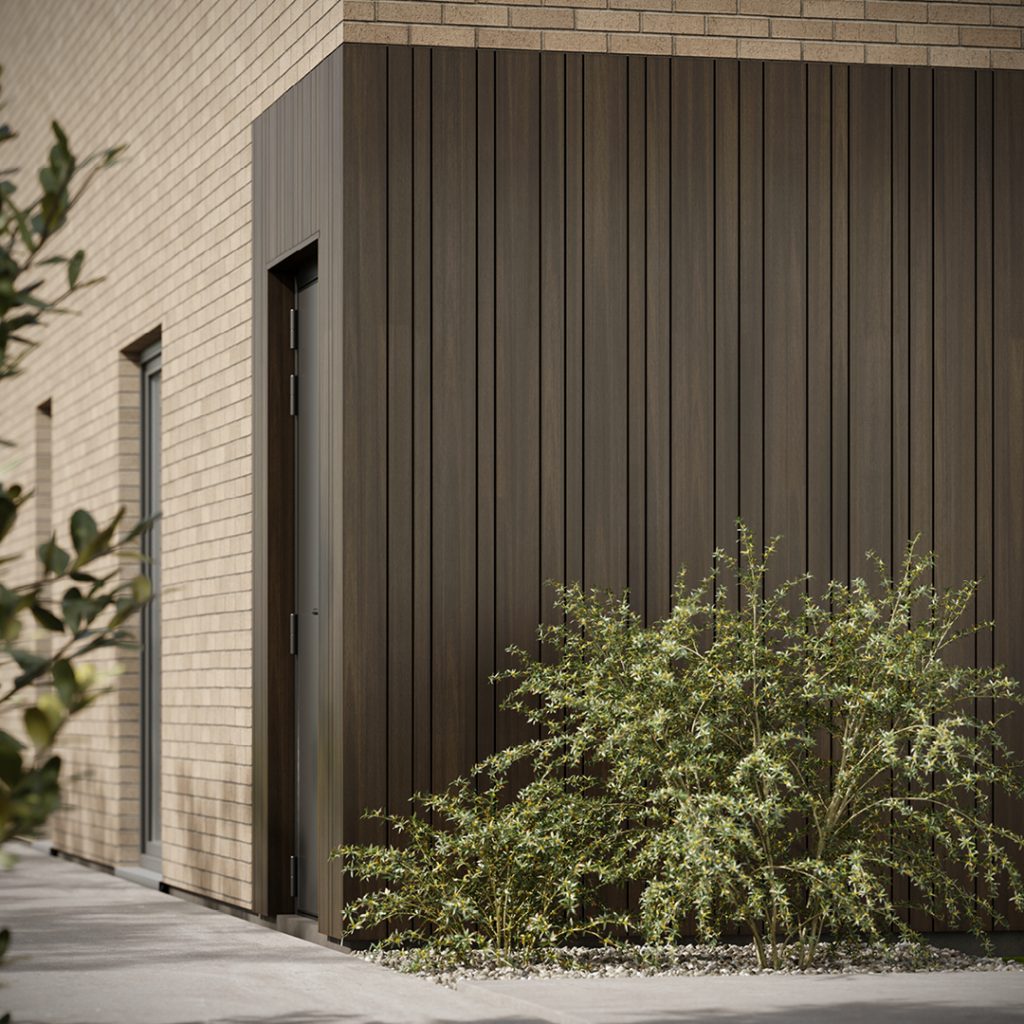
Composite cladding comes in lots of colours, textures and profiles, including wood-grain finishes that look like real timber.
With so many finishes, it’s easy to find one that suits your home, whether you want a classic timber look or something more modern.
Both slatted composite cladding and panel-style cladding can add interest and boost your home’s kerb appeal. Our composite cladding colour guide shows the finishes you can choose from.
Easy to Install
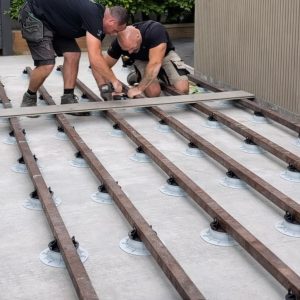
Composite cladding is fairly easy to fit, as long as you use the right preparation, frame and fixing system.
We’d suggest a professional fitter, especially for larger or more complex buildings. But a skilled DIYer may be able to take on a smaller project, using the right tools and following the maker’s instructions.
From our experience, fitting it correctly matters just as much as the quality of the boards. Leaving room for the boards to expand, keeping an air gap behind them and using the right fixings all help the system last.
Poor fitting can affect how the cladding performs and may void the warranty. For more help, see our composite cladding installation tips.
Eco-Friendly
Composite cladding can be a greener choice when it’s made from recycled plastics and reclaimed wood fibres.
Using these materials cuts the need for new raw materials and gives waste a second life. Ecoscape uses recycled materials and reclaimed wood fibres in its composite products, so we rely less on newly sourced materials.
But how green a cladding really is depends on what it’s made of, how it’s made and transported, how long it lasts and what happens to it at the end of its life.
So it’s worth looking past general green claims and checking the details of the product you’re buying.
Durable and Long-Lasting
Composite cladding is made to last outdoors.
Blending wood fibres with plastic makes a material that resists rot, insects and damp. Capped boards can also resist stains, scratches and fading better.
Unlike untreated timber, it doesn’t need treating again and again to stop it decaying. And because it needs so little care, it can be good value over the long term.
It may cost more than some timber at the start, but you avoid many of the regular costs of repainting, staining and treating wood.
How long it lasts will depend on the product, the weather it faces, how it’s fitted and how it’s cared for. So always check the maker’s warranty and technical details.
Provides Additional Protection
Composite cladding adds an extra outer layer that helps shield the wall behind it from rain, wind and weather.
Because composite boards soak up less water than timber, they’re less likely to swell, split or break down when they get wet and dry out again and again.
But composite cladding doesn’t replace a properly designed weatherproof wall. You may still need membranes, ventilation, drainage and the right fixings, depending on the job. How well the cladding protects your wall depends on the whole system, not just the boards.
Adds Visual Appeal
Composite cladding is a great way to refresh the outside of a building without the regular painting and treating timber needs.
With its range of colours and profiles, it suits modern homes, extensions, garden buildings and some commercial projects.
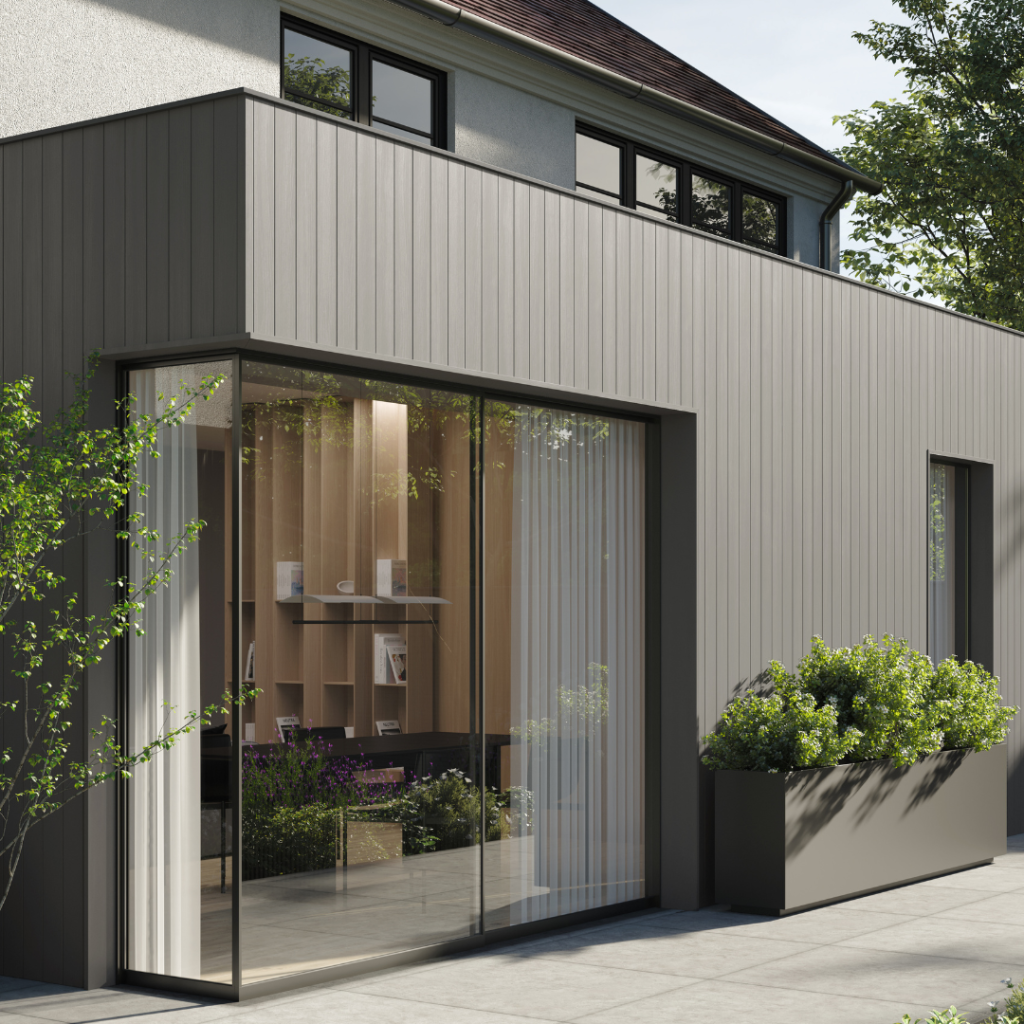
Pairing it with brick, render or other materials can add contrast and a striking design touch.
A smart, well-kept exterior can boost kerb appeal and make a home more attractive to buyers. But cladding won’t automatically add value to your home. Any gain will depend on the property and the quality of the work.
What Are the Cons of Composite Cladding?
Composite cladding has plenty of benefits, but there are some downsides to think about before you choose it.
Initial Upfront Costs Can Be Higher
One of the main drawbacks of composite cladding is the price at the start. Good-quality boards, especially capped ones, can cost more than basic timber or some uPVC cladding. You’ll also need to include battens, trims, fixings and labour in your total budget.
Lower upkeep can make up for the higher price over time. But this depends on which products you’re comparing and how long the cladding stays up.
So it’s worth comparing the total fitted cost and the upkeep needed, rather than just the price per board.
Some Fading or Colour Changes Can Occur
Composite cladding is made to resist fading, but no outdoor material is fully immune to years of weather and sunlight. Some products, especially uncapped boards, may change colour more noticeably as they weather.
Capped boards usually hold their colour better, because their outer layer helps protect them from sunlight. How much the colour changes depends on the product, how it’s made, the weather it faces and the maker’s specification.
Check the colour-fade warranty before you buy, rather than assuming all composite cladding will perform the same. Our guide to how long composite cladding lasts covers fading in more detail.
Composite Cladding Expands and Contracts
Composite cladding can expand and shrink as the temperature changes.
This is normal, but it means the boards must be fitted with room to move.
Boards fitted without the right gaps or fixings may warp, shift or leave visible gaps. So it’s vital to follow the maker’s fitting instructions, especially at board ends, corners and where the cladding meets other surfaces.
It Cannot Be Refinished Like Traditional Timber
Timber can often be sanded, stained or repainted to change its look. Composite cladding is made to keep its factory finish instead. If you want a completely new colour a few years later, replacing the boards may be easier than trying to repaint them.
That’s why it’s so important to choose the right colour and finish from the start.
Product Quality Can Vary
Not all composite cladding is made to the same standard. The recycled materials used, how the boards are built, their protective coatings and quality checks can all affect how they look, how tough they are and how well they last.
Cheaper products may not resist stains, fading or wear as well as better-quality ones.
Having developed and launched our own WPC systems, we know these differences can affect how cladding performs over time. That’s why it’s worth looking beyond looks and price, and checking the technical details, warranty and fitting requirements of the product you’re choosing.
Fire Performance and Building Regulations Must Be Considered
Composite cladding isn’t automatically suitable for every building.
How it reacts to fire depends on the product and, where relevant, the tested system. A material that contains plastic shouldn’t be assumed to be non-combustible or right for every type of building.
Depending on the building’s height, use, location and construction, certain fire safety rules may apply. Always check the product’s declared fire rating and the building regulations that apply before you specify or fit composite cladding. For more demanding projects, you may need professional advice.
Is Composite Cladding Better Than Timber?
Composite cladding is often chosen instead of timber because it looks similar but needs far less care.
Timber is still a great option, especially if you love the character of real wood and want to be able to repaint or refinish it. But timber usually needs more regular care to protect it from damp, decay and weather.
So composite cladding is worth considering if you want a low-effort exterior that lasts. Neither material is automatically the best choice for every project.
| Feature | Composite cladding | Timber cladding |
|---|---|---|
| Maintenance | A clean now and then | May need regular treatment |
| Damp resistance | Generally good | Depends on the wood and how it’s treated |
| Look | Wood-effect finishes | Natural wood grain |
| Colour changes | Depends on the product and sun exposure | Weathers naturally; can be refinished |
| Durability | Resists rot and insects | Depends on the wood, treatment and upkeep |
| Upfront cost | Often more than basic timber | Wide range of prices |
| Refinishing | Not usually made to be repainted | Can often be painted or stained |
Well-chosen timber that’s fitted and cared for properly can last for many years. Equally, good-quality composite cladding is a practical choice if you want the look of wood with less upkeep.
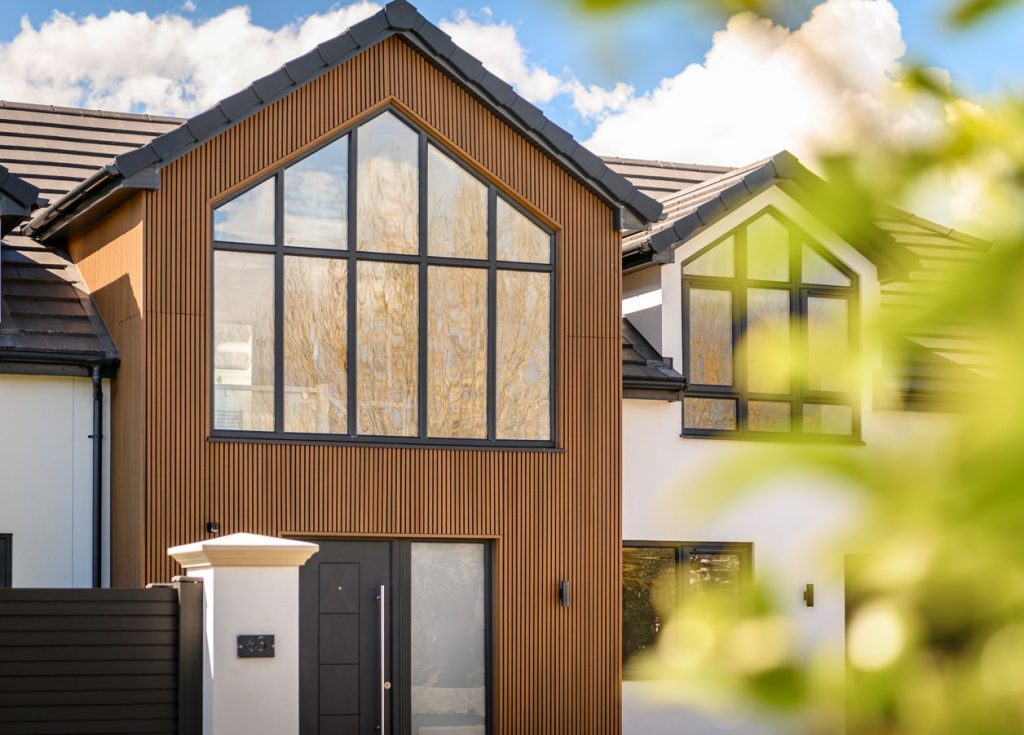
Where Can I Use Composite Cladding?
Composite cladding can be used on a wide range of homes and commercial buildings.
Common uses include outside walls, extensions, garages, garden rooms, sheds and other outbuildings. For more ideas, browse our composite cladding range. Whether a product suits your project will depend on the building, the fitting system and any technical rules that apply.
Conceal Exterior Walls
Composite cladding can refresh tired or dated outside walls. It gives a smart finish that can transform the look of brick or other surfaces.
But cladding should never be used just to hide structural cracks, damp or other building faults. These should be checked and fixed before any cladding goes up.
Use Cladding as a Design Feature
Composite cladding is a popular way to add texture, contrast and detail to the outside of a building.
You can mix colours and board profiles with brick or render for a distinctive finish.
Natural wood-effect colours can soften the look of modern buildings, while darker shades and slatted boards are often used for a contemporary style.
Create a Feature Wall
Composite cladding makes an eye-catching feature wall, especially on garden rooms and outdoor living spaces.
It can also be used for some indoor designs, as long as the product is suitable for indoor use and meets the relevant fire and fitting rules.
Architectural Design
Composite cladding gives architects and designers a choice of colours, textures and profiles for homes and commercial projects. It can be used as an accent or as part of a wider design.
On larger projects, the cladding system should be specified with care, taking account of structural support, movement, ventilation and fire performance. You can see examples in our commercial cladding projects.
Frequently Asked Questions
Is Rendering Cheaper Than Composite Cladding?
Render can cost less at the start than some composite cladding systems. But this depends on the property, the prep work, the finish you choose and labour costs.
The two need different upkeep and repairs, so it’s more useful to compare total project costs than the materials alone.
Do You Need Planning Permission to Clad Your House?
You may not need planning permission for some cladding projects, but it depends on the property, where it is and the work you plan.
In England, some cladding work may count as permitted development, with limits. Extra rules can apply to listed buildings, conservation areas and other protected areas. The rules differ across the UK, so always check with your local planning authority before you start.
Does Composite Cladding Improve Insulation?
Composite cladding isn’t a replacement for proper wall insulation.
A well-designed cladding system can be part of an insulated wall. But the boards on their own shouldn’t be expected to make your home much warmer or cut your energy bills.
Any insulation benefit depends on the whole wall build-up and the insulation used.
Is Composite Cladding a Fire Risk?
Different composite cladding products have different fire ratings, depending on what they’re made of and how they’re built.
Check the product’s declared fire performance and whether it suits the building you’re cladding. Composite cladding should never be called fireproof or fire-resistant without evidence for that specific product.
How Long Does Composite Cladding Last?
Good-quality composite cladding is made to last outdoors for a long time, and some makers offer warranties of up to 25 years. But the length of a warranty isn’t the same as how long the cladding will last.
How long it lasts depends on how the boards are made, the weather they face, how well they’re fitted and how they’re cared for. Always check the warranty terms for the product you plan to use.
Is Composite Cladding Worth the Money?
Composite cladding can be worth the extra cost at the start if you value its looks, durability and low upkeep.
It’s especially appealing if you want a timber-style finish without painting, sealing or staining it every few years. If the lowest upfront cost matters most, a cheaper option may suit you better.
The best choice depends on your budget, the building and how much upkeep you’re happy to do.
Final Thoughts
From our experience developing and supplying composite products, we think composite cladding is a very practical alternative to timber, especially if you want it to last and need little care. But it isn’t right for every building. Think about the upfront cost, the fitting requirements and fire performance before you decide.
The key is to choose a good-quality product that suits the job, and to have it fitted correctly. If you want a natural wood-effect finish without the ongoing treatment timber needs, composite cladding is well worth considering.
Not sure which cladding is right for your project? Order a free sample pack to see and feel the boards for yourself, or request a free quote and our team will help you choose the right product and work out how much you need. For technical or specification advice, get in touch with the Ecoscape team.