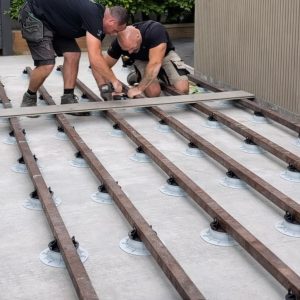
Composite cladding can last for several decades if it’s fitted and cared for properly. Many products come with a 20 to 25-year warranty. How long it really lasts depends on the materials, the weather it faces and how well it’s fitted.
Compared with timber cladding, composite usually needs less care and copes better with damp.
So what affects how long composite cladding lasts, and how does it compare with other cladding?
What Is Composite Cladding Made From?
Composite cladding is made from wood-plastic composite (WPC). This is a building material made to look like wood, but it’s far tougher.
Our composite cladding boards are made from a mix of recycled wood fibre, recycled plastic, colourants and binding materials. The mix is heated to a very high temperature, shaped into cladding boards, given a wood-grain texture and then left to cool.
There are two types of wood-plastic composite cladding: uncapped and capped.
Capped boards have an extra layer of plastic. This protects them from the weather, fading, scratches and stains better than uncapped boards.
How Long Does Composite Cladding Last Compared to Other Materials?
How long any cladding lasts depends on the material, how well it’s fitted, how it’s cared for and how much weather it faces.
- Timber cladding: depending on the type of wood, how it’s treated and how it’s cared for, timber can last for several decades. Some hardwoods and naturally durable softwoods can last a very long time if they’re fitted well.
- Composite cladding: good-quality composite cladding is made to last outdoors for a long time. Ecoscape’s composite cladding comes with a 25-year warranty. But a warranty period isn’t the same as the most the cladding can last.
- uPVC cladding: uPVC can also last for decades, but how it looks and performs depends on its quality, how much sun it gets and how it’s fitted.
The main advantage of composite cladding is that it combines durability, damp resistance and low upkeep.
Why Does Composite Cladding Last Longer Than Wood Cladding?
The recycled plastic in composite cladding helps it stand up to the weather far better than timber. Wood is a natural material, whether it’s treated or not.
The plastic helps the boards soak up less water and resist decay better than untreated timber. But composite cladding isn’t fully immune to fading, scratches or warping. How well it performs over time depends on how the board is made, its protective coating, how it’s fitted and the weather it faces.
Why Does Capped Composite Cladding Last Longer Than Uncapped?
As we said above, the extra layer of plastic around capped composite cladding helps it last longer and makes it tougher than uncapped cladding. This layer gives extra protection against scratches, stains and the weather.
Uncapped composite cladding is still far tougher than standard timber cladding. Its recycled plastic content protects it from the weather much better than wood can.
FAQs
Does composite cladding fade?
Composite cladding can change colour a little over time. How much depends on the type of board and how much sun and weather it gets.
Uncapped wood-plastic boards may go through an early weathering stage, as natural compounds in the wood fibres react to damp and sunlight. This can make the colour a little lighter.
Capped composite cladding has an extra protective plastic layer. This helps it resist sunlight, stains and weathering better.
Ecoscape’s Forma composite cladding is capped and made to hold its colour for a long time. Fade resistance is covered by its warranty terms.
No outdoor material should be expected to stay exactly the same in every condition. But good-quality capped composite cladding is made to keep its looks for many years without painting or staining.
For the best results, follow the maker’s fitting and cleaning advice.
Final Thoughts
Composite cladding is made to last for decades, with far less care than timber.
How long it really lasts depends on the quality of the material, how well it’s fitted and the weather it faces.
Choose a suitable cladding system, follow the maker’s fitting instructions and keep the boards clean. That way, they’ll keep looking good and performing well for years.