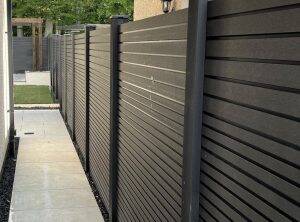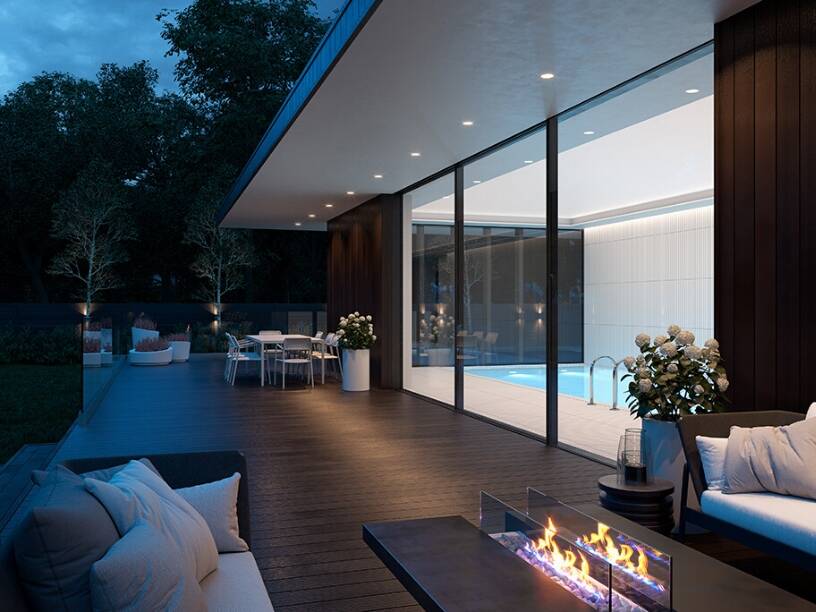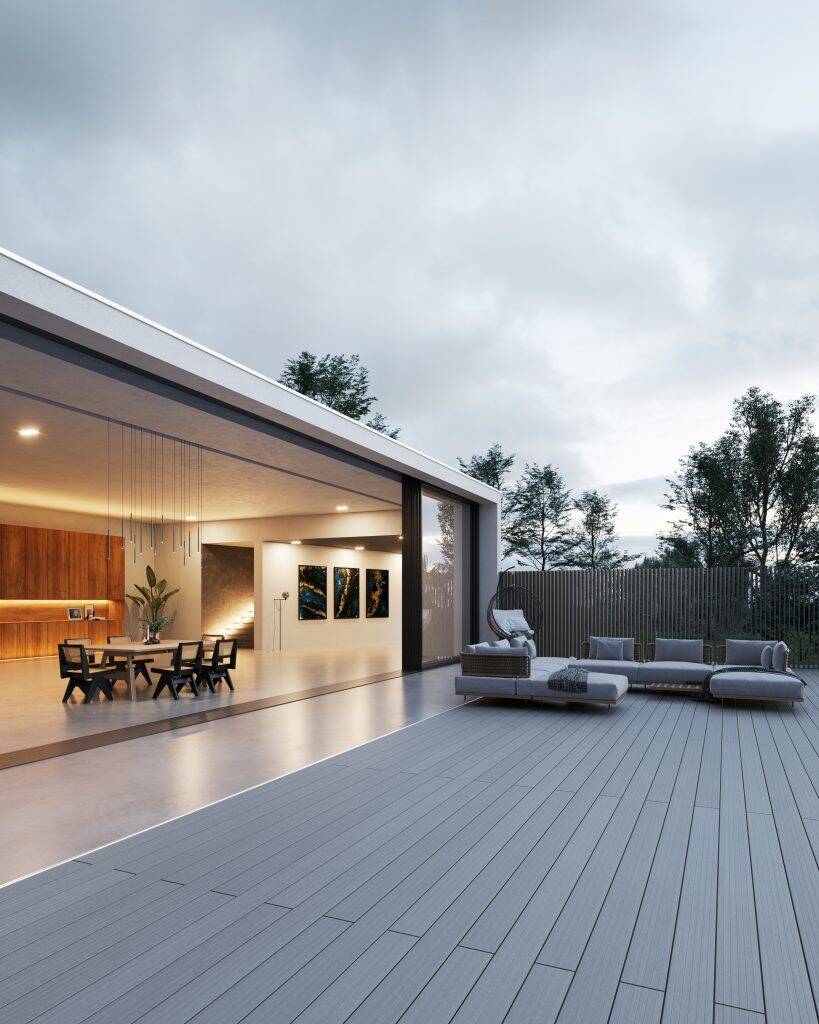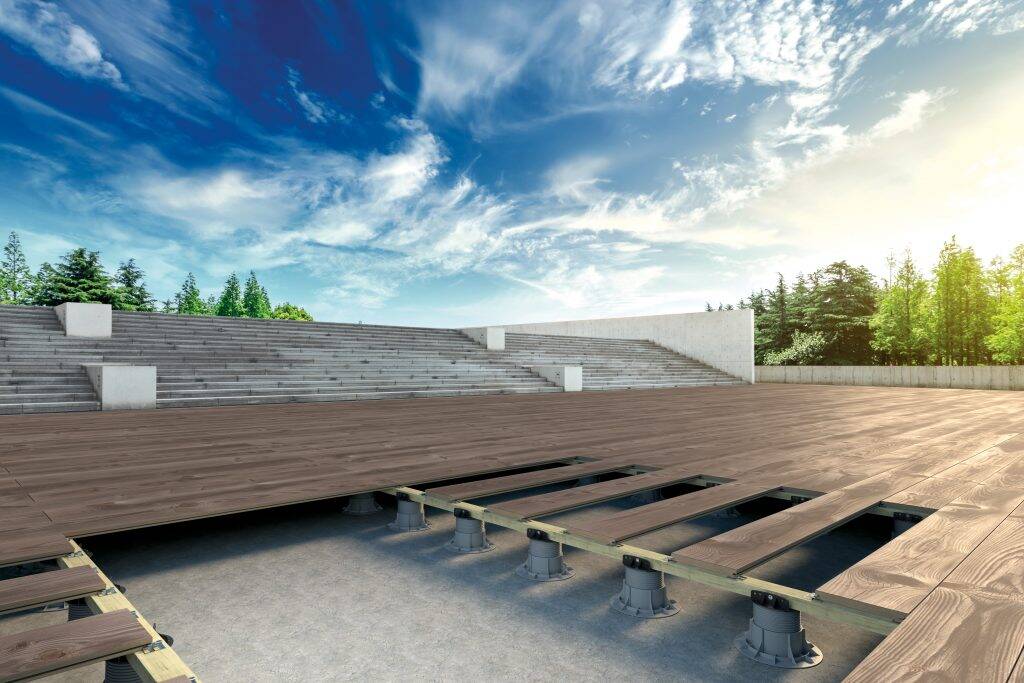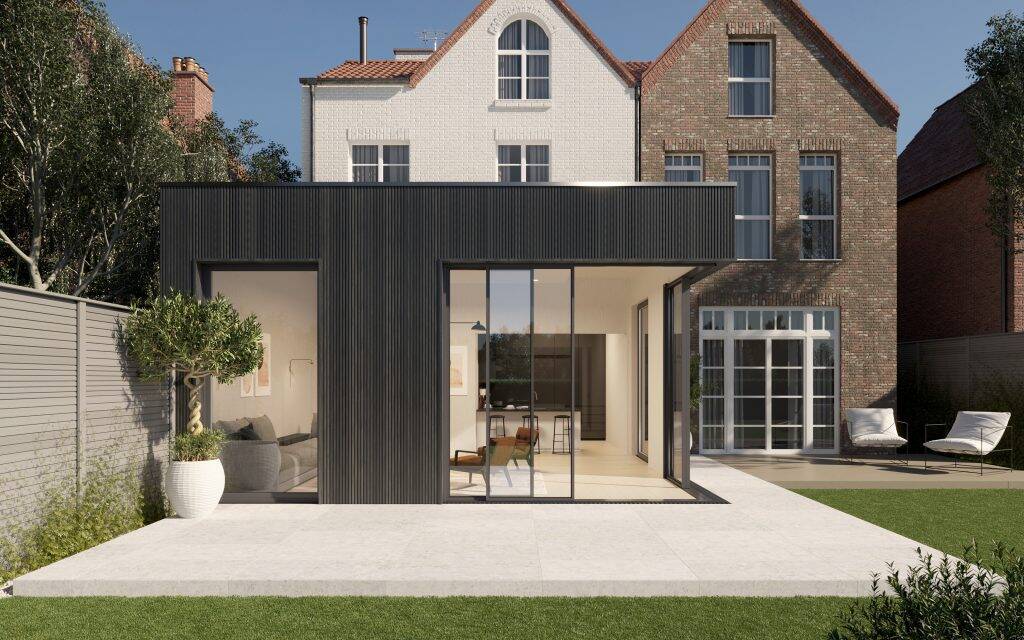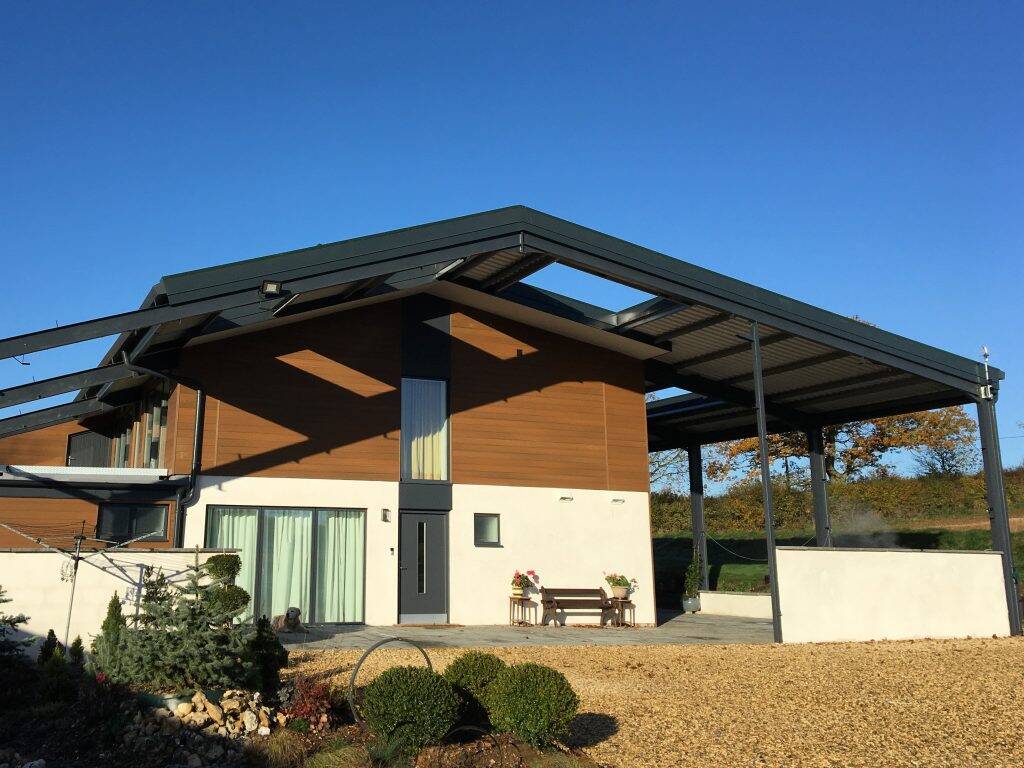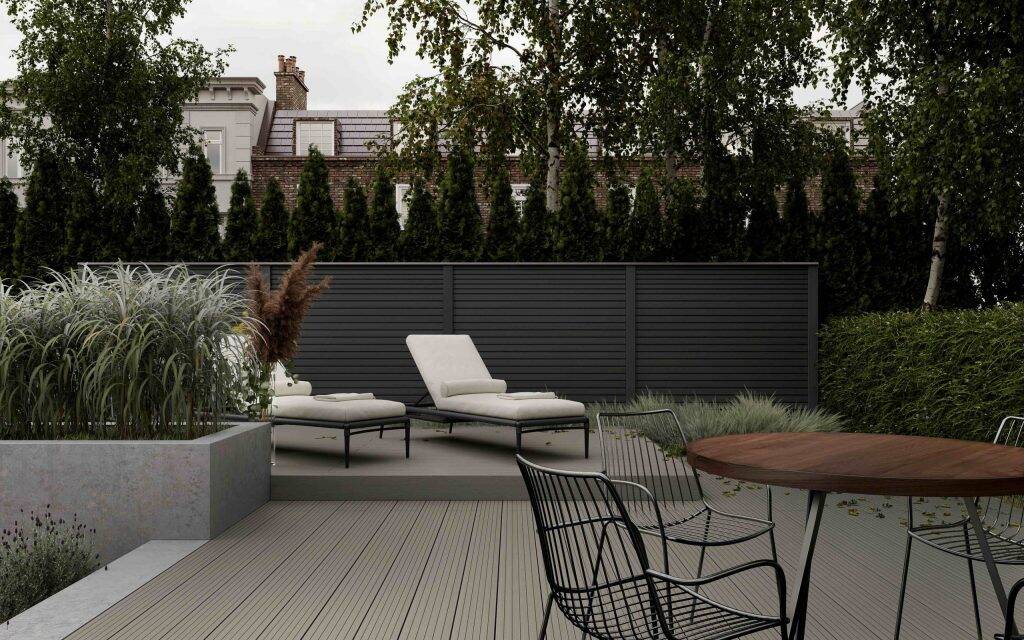
Composite cladding offers an attractive, low-maintenance alternative to traditional timber cladding. Made from a combination of reclaimed wood fibres and recycled plastic, it provides the natural appearance of wood while offering improved resistance to moisture, rot and everyday weathering.
The main advantages of composite cladding are its durability, low maintenance requirements, weather resistance and choice of finishes. The potential disadvantages include a higher initial cost than some traditional materials, possible colour changes over time and the need for correct installation to allow for expansion and ventilation.
If you’re considering composite cladding for your home or commercial building, understanding both its benefits and limitations will help you decide whether it’s the right choice.
At Ecoscape, we’ve spent years developing and supplying wood-plastic composite systems, so we understand both the benefits of the material and the practical considerations that come with choosing it.
What Is Composite Cladding?
Composite cladding is an exterior wall covering manufactured from a combination of reclaimed wood fibres, recycled plastic and binding agents. The finished boards are fitted to the outside of a building, creating a protective and decorative surface.
Unlike traditional timber, composite cladding is designed to resist many of the problems caused by prolonged exposure to moisture and changing weather conditions.
Some composite cladding boards also have an additional protective polymer layer, known as a cap, which improves their resistance to staining, fading and surface wear. There are two main types of composite cladding:
- Uncapped composite cladding: Manufactured from a composite core without an additional protective outer shell.
- Capped composite cladding: Features a protective polymer layer that provides additional resistance to moisture, staining and UV exposure.
The type and quality of composite cladding you choose will influence its appearance, performance and long-term maintenance requirements.
What Are the Pros of Composite Cladding?
Composite cladding offers several advantages over traditional wood cladding, particularly for homeowners who want an attractive exterior without ongoing maintenance.
Low Maintenance
One of the key selling points of composite cladding is that it is exceptionally low maintenance. Unlike conventional timber cladding, composite wall cladding does not require routine painting, staining, sealing or sanding to extend its lifespan.
Composite cladding is also resistant to many of the problems associated with real wood, including rot, splintering and moisture-related deterioration. A simple wash with warm soapy water and a soft brush is usually sufficient to remove everyday dirt and keep the boards looking their best.
Low maintenance does not mean maintenance-free. Exterior cladding will still collect dirt, airborne debris and organic growth, particularly in shaded or damp locations. Regular cleaning and keeping drainage and ventilation areas clear will help maintain its appearance.
Versatile
One of the advantages of composite cladding is its versatility. It comes in various colours, textures and profiles, including natural-looking wood-grain finishes that resemble traditional timber.
The variety of finishes allows homeowners to find a colour and texture that complements their property, whether they prefer a traditional timber appearance or a more contemporary exterior.
Both slatted composite cladding and panel-style cladding can add visual interest and improve a property’s kerb appeal. Our composite cladding colour guide explores the different finishes available.
Easy to Install
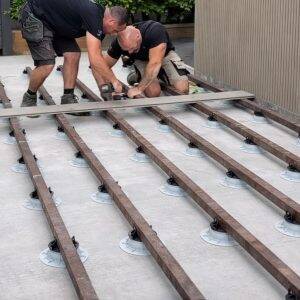
Composite cladding is relatively straightforward to install when the correct preparation, supporting structure and fixing system are used.
Professional installation is advisable, particularly on larger or more complex buildings. However, competent DIY installers may also be able to complete suitable smaller projects using the correct tools and following the manufacturer’s instructions.
From our experience with composite cladding systems, correct installation is just as important as the quality of the boards themselves. Allowing for thermal expansion, maintaining adequate ventilation behind the cladding and using the specified fixings all help ensure the system performs as intended over time.
Incorrect installation can affect performance and may invalidate the manufacturer’s warranty. For more detailed guidance, see our composite cladding installation tips.
Eco-Friendly
Composite cladding can be a more resource-conscious choice where it is manufactured using recycled plastics and reclaimed wood fibres.
Using these materials helps reduce demand for virgin raw materials and gives existing resources another useful application. Ecoscape uses recycled materials and reclaimed wood fibres in its composite products, helping to reduce reliance on newly sourced materials.
However, the environmental performance of composite cladding depends on its actual material composition, manufacturing process, durability, transport and end-of-life arrangements.
It is therefore important to look beyond general sustainability claims and consider the environmental credentials of the specific product.
Durable and Long-Lasting
Composite cladding is designed to provide long-term durability in outdoor conditions.
The combination of wood fibres and plastic creates a material that is resistant to rot, insect damage and moisture-related deterioration. Protective capped surfaces can also improve resistance to staining, scratches and fading.
Unlike untreated timber, composite cladding does not require repeated protective treatments to help prevent decay. Another advantage is that reduced maintenance can make composite cladding a practical long-term investment.
While the initial purchase price may be higher than some timber alternatives, homeowners can avoid many of the recurring costs associated with repainting, staining and treating natural wood.
Actual service life will depend on product quality, exposure, installation and maintenance, so manufacturer warranties and technical specifications should always be checked.
Provides Additional Protection
Composite cladding provides an additional exterior covering that helps shield the supporting wall construction from direct exposure to rain, wind and other weather conditions.
Because composite boards absorb less moisture than natural timber, they are less susceptible to the swelling, splitting and deterioration associated with repeated wetting and drying.
However, composite cladding is not a substitute for a correctly designed weather-resistant wall system. Suitable membranes, ventilation, drainage and appropriate fixings may still be required depending on the installation. The protective performance of the finished cladding depends on the complete system, not simply the boards themselves.
Adds Visual Appeal
Composite cladding offers an effective way to refresh an exterior without the repeated painting and treatment associated with timber.
Its range of colours and profiles makes it suitable for contemporary homes, extensions, garden buildings and selected commercial applications.
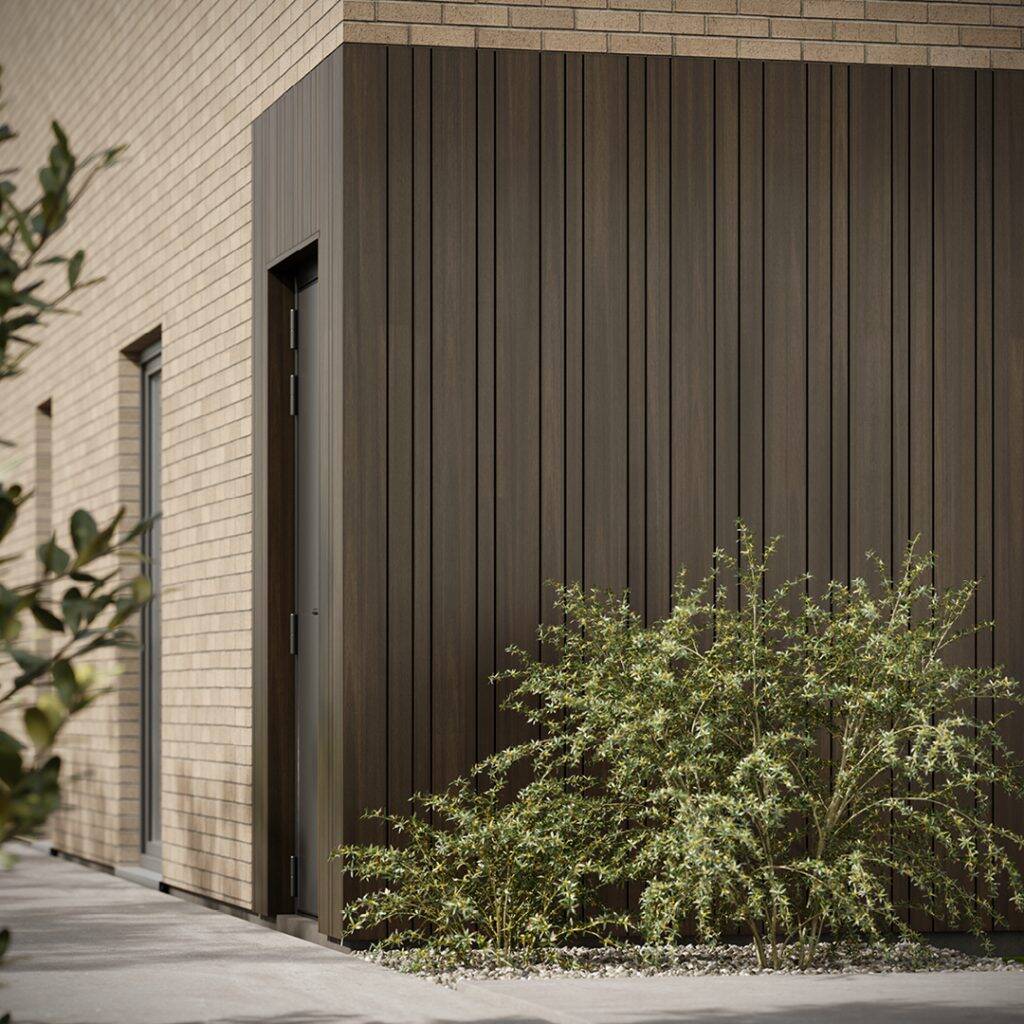
Combining composite cladding with brickwork, render or other exterior materials can create contrast and add architectural interest.
An attractive, well-maintained exterior can improve kerb appeal and make a property more appealing to prospective buyers. However, adding composite cladding does not automatically increase property value, and any financial benefit will depend on the property and quality of the work.
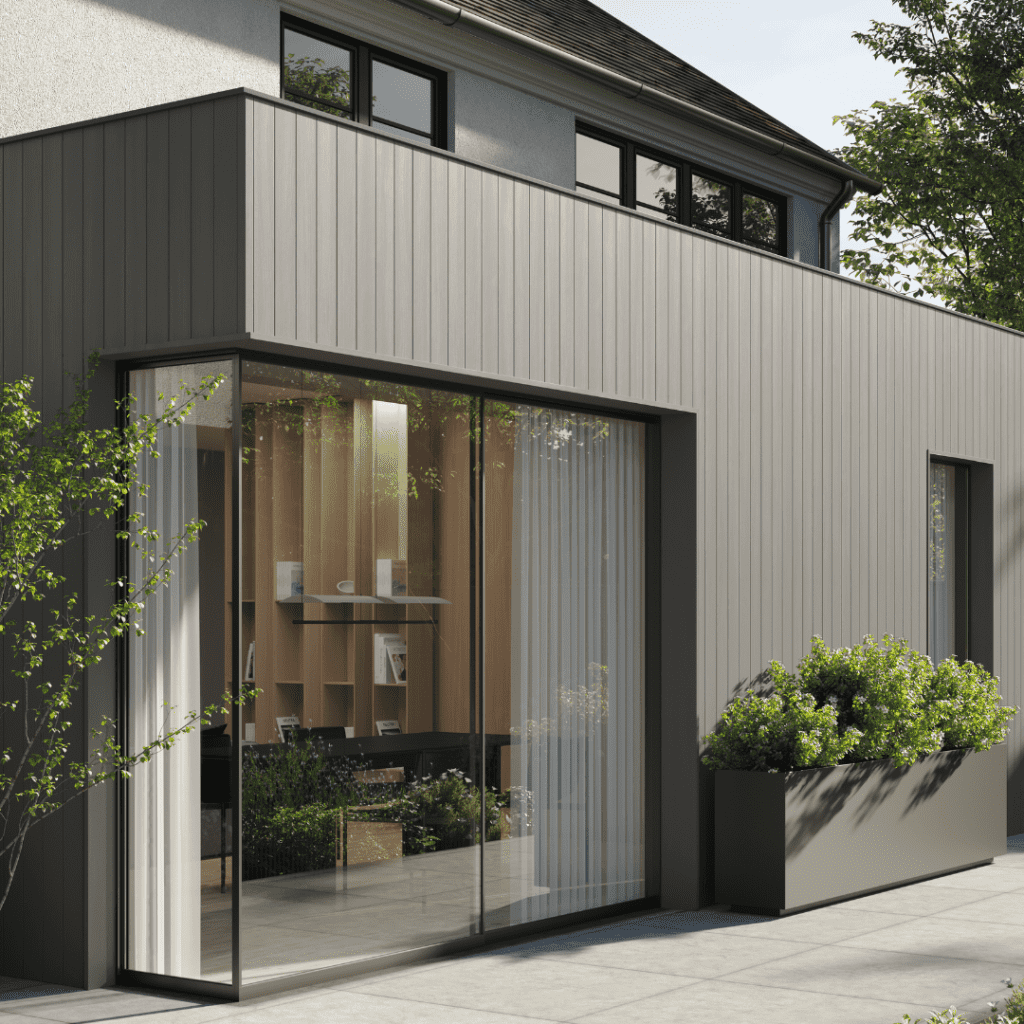
What Are the Cons of Composite Cladding?
Although composite cladding offers several benefits, there are disadvantages worth considering before choosing it for your property.
Initial Upfront Costs Can Be Higher
One of the main disadvantages of composite cladding is its initial purchase price. High-quality composite boards, particularly capped products, can cost more upfront than basic timber or some uPVC cladding alternatives. Installation materials, battens, trims and labour must also be included when calculating the overall project cost.
The higher initial investment may be offset by reduced maintenance requirements over time, but this will depend on the products being compared and how long the cladding remains in use.
It is worth comparing the total installed cost and expected maintenance requirements rather than judging materials purely on their price per board.
Some Fading or Colour Changes Can Occur
Composite cladding is designed to resist fading, but no exterior material is completely immune to prolonged weather and UV exposure. Some composite products, particularly uncapped boards, may experience more noticeable colour changes as they weather.
Capped composite cladding generally provides improved colour stability because its protective outer layer helps reduce UV-related deterioration. The amount of colour change depends on the product, its formulation, exposure and the manufacturer’s specifications.
Check the applicable colour-fade warranty before purchasing, rather than assuming that all composite cladding will perform identically. Our guide to whether composite cladding fades explains this in more detail.
Composite Cladding Expands and Contracts
Composite cladding can expand and contract as temperatures change.
This is a normal characteristic of the material, but it means the installation must allow sufficient room for movement.
Boards installed without the correct spacing or fixing system may experience distortion, movement-related problems or visible gaps. Following the manufacturer’s installation instructions is therefore essential, particularly around board ends, corners and adjoining surfaces.
It Cannot Be Refinished Like Traditional Timber
One of timber’s advantages is that it can often be sanded, stained or repainted to change its appearance. Composite cladding is generally designed to retain its manufactured finish rather than being regularly refinished. If you decide you want a completely different colour several years after installation, replacing the boards may be more practical than attempting to repaint them.
For that reason, choosing the right colour and finish at the outset is particularly important.
Product Quality Can Vary
Not all composite cladding is manufactured to the same specification. Differences in recycled material composition, board construction, protective coatings and quality control can affect appearance, durability and long-term performance.
Lower-priced products may not offer the same resistance to staining, fading or general wear as higher-quality alternatives.
Having developed and introduced WPC product systems, we know that differences in board construction, material composition and protective coatings can affect long-term performance. That’s why it’s important to look beyond appearance and price and check the technical specifications, warranty and installation requirements of the particular product.
Fire Performance and Building Regulations Must Be Considered
Composite cladding is not automatically suitable for every building.
Its reaction-to-fire classification depends on the individual product and, where relevant, the tested system. A material containing plastic should not be assumed to be non-combustible or appropriate for all building types.
Depending on the building’s height, use, location and construction, specific fire safety requirements may apply. Always check the product’s declared fire classification and the applicable building regulations before specifying or installing composite cladding. For projects with more demanding requirements, professional advice may be necessary.
Is Composite Cladding Better Than Timber?
Composite cladding is often chosen as an alternative to traditional timber because it offers a similar natural appearance with fewer maintenance requirements.
Timber remains an attractive option, particularly for homeowners who prefer the character of real wood and the ability to repaint or refinish it. However, timber generally requires more regular attention to protect it from moisture, decay and weathering.
Composite cladding is therefore worth considering when long-term convenience and reduced upkeep are priorities. Neither material is automatically the best choice for every project.
| Feature | Composite cladding | Timber cladding |
| Maintenance | Occasional cleaning | Regular treatment may be needed |
| Moisture resistance | Generally good | Depends on species and treatment |
| Appearance | Manufactured wood-effect finishes | Natural timber grain |
| Colour changes | Depends on product and UV exposure | Weathers naturally; can be refinished |
| Durability | Resistant to rot and insect damage | Depends on timber species, treatment and upkeep |
| Initial cost | Often higher than basic timber | Wide range of prices |
| Refinishing | Usually not intended to be repainted | Can often be painted or stained |
Well-selected, properly installed and maintained timber can perform for many years. Equally, high-quality composite cladding offers a practical alternative for those who want the appearance of wood with less routine maintenance.
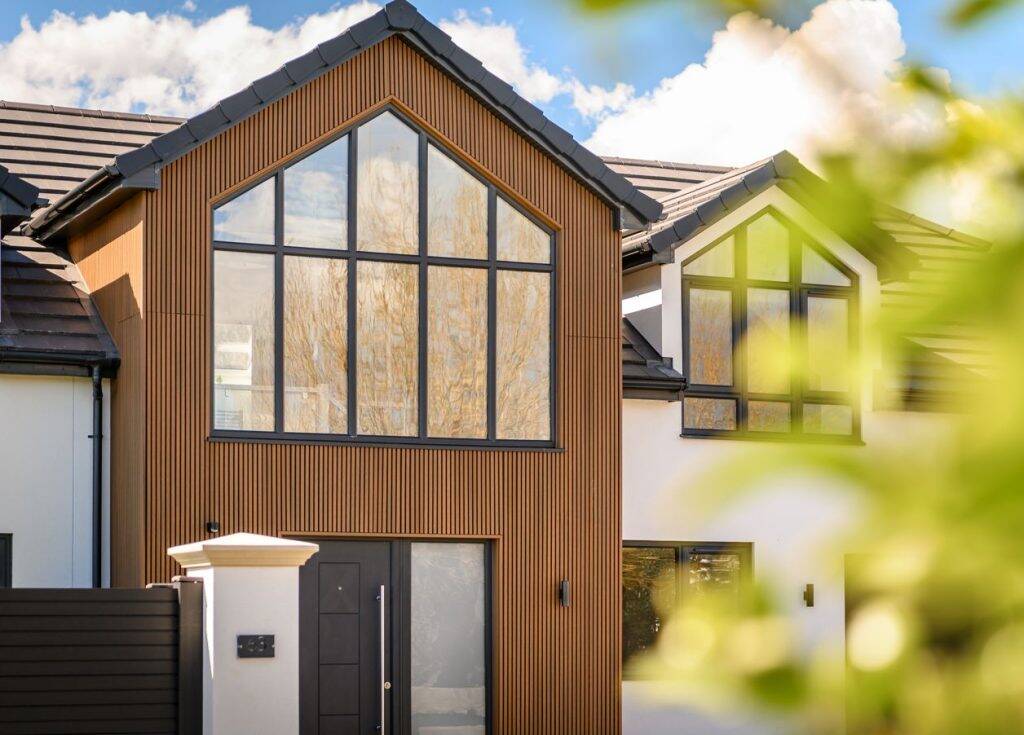
Where Can I Use Composite Cladding?
Composite cladding can be used on a wide variety of suitable residential and commercial projects.
Common applications include exterior walls, extensions, garages, garden rooms, sheds and other outbuildings. For further examples, see our guide to where composite cladding can be used. The suitability of a particular product will depend on the building, installation system and applicable technical requirements.
Conceal Exterior Walls
Composite cladding can be used to refresh the appearance of tired or dated exterior walls. It provides a decorative finish that can transform the look of brickwork or other existing surfaces.
However, cladding should never be used simply to conceal structural cracks, penetrating damp or other building defects. These problems should be investigated and repaired before new cladding is installed.
Use Cladding as a Design Feature
Composite cladding is an increasingly popular way to introduce texture, contrast and architectural detail to an exterior.
Different colours and board profiles can be combined with materials such as brick or render to create a distinctive finish.
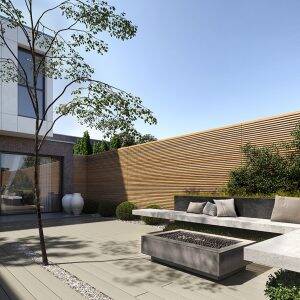
Natural wood-effect colours can soften the appearance of modern buildings, while darker shades and slatted profiles are often used to create contemporary designs.
Create a Feature Wall
Composite cladding can create an eye-catching feature wall, particularly on garden rooms and outdoor living areas.
It can also be considered for certain interior design applications, provided the chosen product is suitable for indoor use and meets the relevant fire and installation requirements.
Architectural Design
Composite cladding provides architects and designers with a choice of colours, textures and profiles for suitable residential and commercial projects. It can be used as an accent material or as part of a wider external design scheme.
For larger projects, the cladding system should be specified with appropriate consideration for structural support, movement, ventilation and fire performance. Our article on composite cladding for commercial applications explores its use in commercial settings.
Frequently Asked Questions
Is Rendering Cheaper Than Composite Cladding?
Rendering can have a lower initial cost than some composite cladding systems, although this depends on the property, surface preparation, chosen finish and labour.
Both materials have different maintenance and repair requirements, so comparing complete project costs is more useful than comparing materials alone.
Do You Need Planning Permission to Clad Your House?
Planning permission may not be required for some house cladding projects, but this depends on the property, its location and the proposed work.
In England, certain cladding works may fall within permitted development rights, subject to restrictions. Additional controls can apply to listed buildings, conservation areas and other designated locations. Rules differ across the UK, so always check with your local planning authority before proceeding.
Does Composite Cladding Improve Insulation?
Composite cladding should not be treated as a replacement for proper wall insulation.
While an appropriately designed cladding system may form part of a wider insulated wall construction, the boards themselves should not be assumed to deliver significant improvements in thermal performance or reductions in energy bills.
Any insulation benefit depends on the complete wall build-up and the insulating materials used.
Is Composite Cladding a Fire Risk?
Composite cladding products have different reaction-to-fire classifications depending on their materials and construction.
It is important to check the specific product’s declared performance and whether it is suitable for the intended building. Composite cladding should never be described as universally fireproof or fire-resistant without supporting product-specific evidence.
How Long Does Composite Cladding Last?
High-quality composite cladding is designed for long-term exterior use, and some manufacturers offer warranties extending to 25 years. However, warranty length and expected service life are not the same thing.
Actual longevity depends on the board’s construction, environmental exposure, installation quality and ongoing care. Always check the warranty conditions for the product you intend to use.
Is Composite Cladding Worth the Money?
Composite cladding can be worth the additional upfront cost if you value its appearance, durability and reduced maintenance requirements.
It is particularly appealing to homeowners who want a timber-style finish without regularly painting, sealing or staining the exterior. If initial cost is your main priority, less expensive alternatives may be more appropriate.
The best choice depends on your budget, the building’s requirements and how much ongoing maintenance you are prepared to undertake.
Final Thoughts
From our experience developing and supplying composite products, we believe composite cladding offers a very practical alternative to traditional timber, particularly where durability and reduced maintenance are priorities. However, it isn’t automatically the right material for every building, and factors such as initial cost, installation requirements and fire performance must be considered before making a decision.
The key is to choose a suitable, good-quality product and have it installed correctly. For homeowners looking for a natural wood-effect finish without the ongoing treatment associated with timber, composite cladding is well worth considering.
Not sure which cladding is right for your project? Order a free sample pack to see and feel the boards for yourself, or request a free quote and our team will help you choose the right product and work out quantities. For technical or specification advice, get in touch with the Ecoscape team.