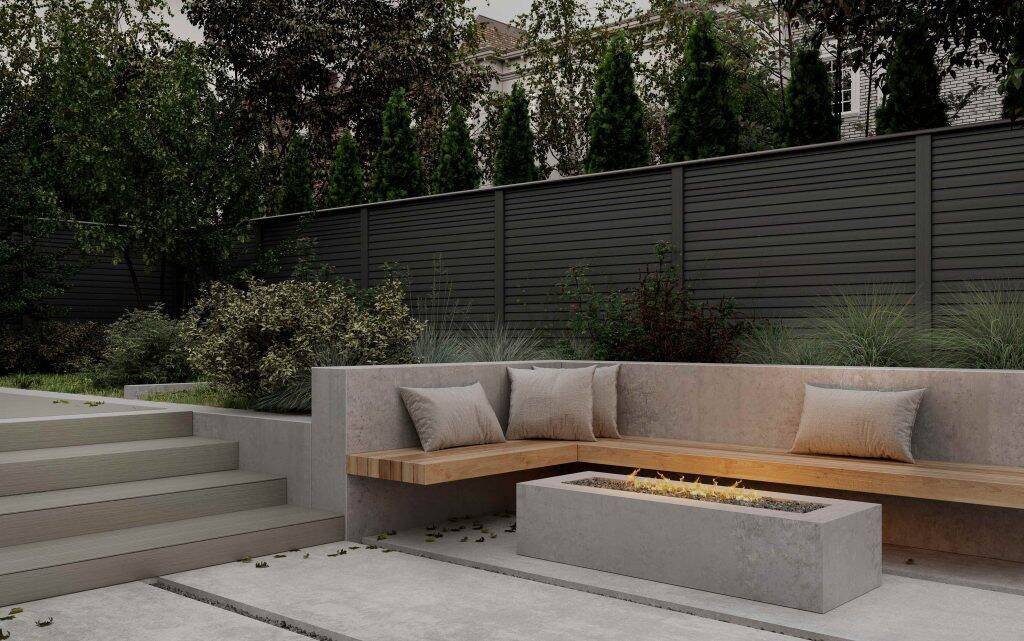
Yes, composite cladding expands and contracts as temperatures change. Boards expand slightly when they become warmer and contract as temperatures fall.
This is a normal characteristic of composite materials and is something that needs to be considered during installation.
Although composite cladding is designed to resist moisture-related movement, sufficient expansion gaps are still needed to accommodate temperature changes and prevent unnecessary pressure on the boards.
What is Expansion and Contraction?
At this stage, you are probably wondering what exactly expansion and contraction of cladding panels is and asking yourself, “is composite cladding prone to behave in a similar way?”.
Expansion and contraction of cladding boards or decking material happen when the material is exposed to extreme temperature changes and high humidity. It describes the movement of materials, i.e. the growth or shrinking of materials along the edges.
This is especially the case with traditional wood cladding boards as they are very prone to absorbing moisture, which causes the expansion of the material. The exact opposite – contraction – appears as soon as the wood has been lacking moisture.
The same goes for high temperatures. Any material that is exposed to a very hot temperature will expand. How much it will expand depends on the material.
Temperature change actually happens throughout the day, from cooler temperatures during the night to warmer temperatures during the day. This basically means that any building materials are always exposed to changing temperatures.
The UK has a lot of fluctuating weather conditions with ample amounts of rain, followed by blazing sunshine; it is, therefore, important to consider that your cladding boards will likely expand and contract.
Composite cladding primarily expands and contracts in response to temperature changes. Unlike traditional timber, which can swell and shrink as its moisture content changes, composite cladding is designed to absorb less moisture and provide greater dimensional stability.
However, composite boards still experience thermal movement, so expansion and contraction must be considered when fitting them.
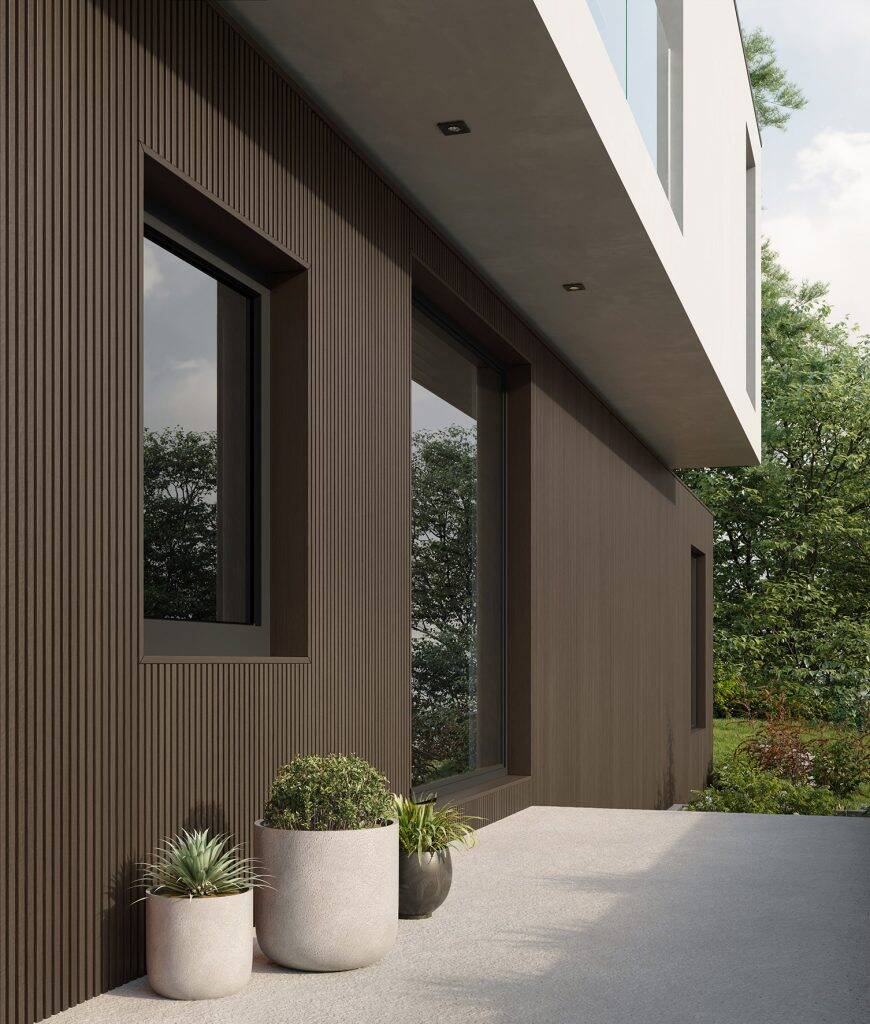
Why Are Expansion Gaps Important?
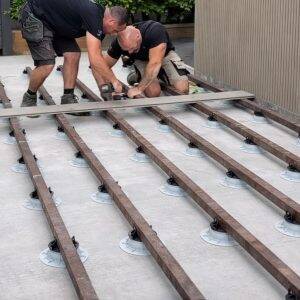
Expansion gaps allow composite cladding boards to move naturally as temperatures change.
Without sufficient clearance, expanding boards can press against neighbouring boards, trims or surrounding structures. Restricting this movement may cause distortion or warping.
The correct expansion gap depends on the cladding system, board length and installation conditions. Always follow the manufacturer’s specifications rather than assuming the same measurement applies to every product.
For specific spacing requirements and fixing instructions, see our composite cladding installation guide.
For further information about distortion, read our guide to composite cladding warping.
FAQs
Here are some more important facts about expansion and contraction that will likely help you when wanting to install cladding at home.
Why does composite cladding expand less than timber?
Composite cladding combines wood fibres with plastic polymers, helping reduce moisture absorption compared with traditional timber.
Timber can swell and shrink as it absorbs and releases moisture. Composite cladding is less susceptible to this type of movement, although it still expands and contracts as temperatures change.
The amount of movement depends on the materials used, board dimensions and environmental conditions.
Why is it important to consider expansion and contraction?
If you haven’t put the expansion and contraction into consideration before installation of your composite cladding by calculating for enough room, i.e. adding an expansion gap, your boards will expand and press against one another until they warp.
This does not only apply to composite cladding but also to other composite materials such as composite deck boards and especially for real wood. Even treated wood does expand and contract.
Why do I need to install battens between the wall and the composite materials?
In order to prevent composite cladding from getting in contact with your house wall and potentially trapping moisture that can be damaging to your home’s exterior, installing a flat piece of wood in between the composite cladding and the wall is essential.
Closing Thoughts
Yes, composite cladding expands and contracts as temperatures change. This is a normal characteristic of the material and does not indicate a fault.
By allowing sufficient expansion gaps and following the manufacturer’s fixing requirements, composite cladding can accommodate this movement without unnecessary pressure or distortion.
The important consideration is ensuring that the installation allows for the natural movement of the boards throughout the year.