No fencing is completely maintenance-free, but some materials require considerably less upkeep than others. Composite, aluminium and vinyl (PVC) fencing are among the lowest-maintenance options, as they generally don’t need the regular painting, staining or treatment associated with timber.
However, even low-maintenance fencing needs occasional cleaning and inspections to keep it looking good and performing properly.
So, which fencing materials require the least maintenance, and how much upkeep do they actually need?
What Are the Benefits of Low-Maintenance Fencing?
The main advantage of low-maintenance fencing is the reduced time and effort required to keep it in good condition.
Compared with traditional timber, suitable low-maintenance fencing materials can offer:
- Less frequent treatment: Composite, aluminium and vinyl fencing generally don’t require routine painting, staining or sealing.
- Good weather resistance: Materials designed for outdoor exposure can resist moisture-related deterioration.
- Easier cleaning: Dirt, algae and surface deposits can usually be removed using appropriate cleaning methods.
- Reduced ongoing costs: Less frequent treatment can mean lower maintenance expenditure over the fence’s lifetime.
- Long-term appearance: Regular cleaning helps maintain the original finish without repeated repainting.
However, low maintenance doesn’t mean that fencing is immune to damage. Posts, fixings and panels still need occasional inspection, and the amount of upkeep depends on the material and environmental conditions.
Which Fencing Materials Require the Least Maintenance?
The amount of maintenance a fence needs depends on its material, protective finish, installation and exposure to the weather.
Composite, aluminium and vinyl fencing generally require less routine treatment than traditional timber. Steel can also be relatively low-maintenance when appropriately protected against corrosion.
Low-Maintenance Fencing Comparison
| Fencing material | Typical maintenance | Painting or treatment required? |
|---|---|---|
| Composite fencing | Occasional washing and inspections | Generally no |
| Aluminium fencing | Cleaning and checking protective finishes and fixings | Usually no, unless the finish is damaged |
| Vinyl (PVC) fencing | Washing to remove dirt and surface deposits | Generally no |
| Powder-coated or galvanised steel | Cleaning and checking for coating damage or corrosion | Repairs may be needed if protective finishes are damaged |
| Timber fencing | Cleaning, inspections and periodic protective treatment | Often yes, depending on the timber and finish |
The best option depends on whether your priority is minimal upkeep, privacy, appearance or resistance to particular environmental conditions.
Composite Fencing
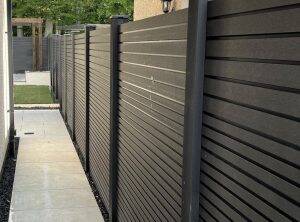
Composite fencing combines wood fibres with plastic polymers to create boards designed for outdoor use.
Unlike traditional timber, composite boards generally don’t require painting, staining or sealing to protect them from normal weather exposure.
The plastic component helps reduce moisture absorption, lowering the risk of moisture-related deterioration.
However, composite fencing isn’t completely maintenance-free. Dirt, algae and organic deposits can accumulate on the surface, particularly in shaded or damp areas.
Occasional cleaning and inspections will help maintain its appearance and identify any damaged boards or loose components.
You can explore Ecoscape’s composite fencing range to see the available board styles, colours and system components.
Aluminium Fencing
Aluminium fencing is naturally resistant to rust and is often supplied with a powder-coated finish.
Routine maintenance generally involves washing away dirt and checking for damage to the surface finish.
Although aluminium doesn’t rust in the same way as steel, its protective finish can still become scratched or damaged.
Aluminium is a practical low-maintenance option, particularly where an open metal fencing design is preferred.
Vinyl (PVC) Fencing
Vinyl fencing is made from polyvinyl chloride and generally requires occasional washing rather than regular painting or staining.
Its non-porous surface helps resist moisture absorption, making routine cleaning relatively straightforward.
However, PVC fencing can become brittle or discoloured over time, depending on product quality and environmental exposure.
Damaged panels may need replacing rather than refinishing.
Steel Fencing
Steel fencing can offer good durability and relatively low maintenance when protected by galvanising, powder coating or another suitable finish.
Regular inspections are important because damaged protective coatings can expose the underlying steel to corrosion.
Unlike aluminium, steel can rust when its protective finish is compromised.
Maintenance requirements therefore depend heavily on the quality and condition of the corrosion protection.
Timber Fencing
Timber fencing generally requires more maintenance than composite, aluminium or PVC alternatives.
Wood absorbs and releases moisture, which can contribute to swelling, shrinkage and deterioration over time.
Depending on the timber species, treatment and exposure, maintenance may include cleaning, repainting, staining or applying protective coatings.
Naturally durable and pressure-treated timbers can provide long service lives, but they still benefit from periodic inspections.
For homeowners whose main priority is reducing routine upkeep, composite fencing offers a useful balance of privacy, appearance and relatively low maintenance.
How Much Maintenance Does Composite Fencing Need?
Composite fencing requires relatively little routine maintenance, but occasional cleaning and inspections help keep it in good condition.
Unlike traditional timber, composite fencing generally doesn’t need regular painting, staining or sealing.
However, outdoor exposure can still lead to accumulated dirt, algae, leaves and other debris.
How to Maintain Composite Fencing
The following simple maintenance practices are usually sufficient:
- Clean when necessary: Use warm water, a mild detergent and a soft brush or cloth to remove dirt and surface deposits. Rinse thoroughly.
- Remove algae and organic growth: Clean affected areas using a product approved for the composite material.
- Inspect boards and posts: Check for loose fixings, damaged panels or movement in the supporting structure.
- Clear surrounding vegetation: Trim back plants and shrubs that trap moisture or obstruct access to the fence.
- Check drainage: Prevent leaves, soil and other debris from accumulating around the base of the fencing.
Avoid abrasive cleaning tools or harsh chemicals unless the manufacturer specifically approves them.
Does Composite Fencing Need More Maintenance in Winter?
Composite fencing doesn’t normally require special winter treatments, but it’s sensible to inspect it after periods of strong wind, heavy rain or freezing weather.
Remove accumulated debris, check that posts remain secure and ensure water isn’t collecting around the base of the fence.
A general inspection in spring is also useful for identifying any damage caused by winter weather.
Does Composite Fencing Need Sealing?
No. Ecoscape composite fencing does not normally require sealing, staining or painting.
Its wood-plastic composite construction is designed for outdoor exposure without the routine protective treatments associated with traditional timber fencing.
Applying unnecessary sealants or coatings may affect the surface finish or conflict with the manufacturer’s maintenance recommendations.
The best approach is to follow the cleaning and care instructions for the particular fencing system.
Is Low-Maintenance Fencing More Expensive?
Low-maintenance fencing can cost more initially than basic timber fencing, although prices vary considerably between materials and products.
However, the initial purchase price is only part of the overall cost.
Timber fencing may require periodic treatments, painting and repairs, while composite, aluminium and vinyl fencing generally need less routine upkeep.
Over time, these differences can reduce maintenance expenditure, although the total lifetime cost depends on installation, material quality and the fence’s service life.
Frequently Asked Questions
What Is the Most Maintenance-Free Type of Fencing?
Composite, aluminium and vinyl fencing are among the lowest-maintenance options.
All three generally avoid the regular painting and protective treatments associated with traditional timber, although occasional cleaning and inspections remain necessary.
The most suitable material depends on the property’s requirements and environmental conditions.
Does Composite Fencing Need Painting or Staining?
No. Composite fencing is designed to retain its finish without routine painting or staining.
However, occasional cleaning is still recommended to remove dirt, algae and other surface deposits.
How Often Should Composite Fencing Be Cleaned?
There is no single cleaning schedule suitable for every property.
A fence in a sheltered, shaded or heavily planted garden may need cleaning more frequently than one in an open, sunny location.
Inspect the surface periodically and clean it when dirt, algae or other deposits become noticeable.
Final Thoughts
No fencing material is completely maintenance-free, but composite, aluminium and vinyl fencing can substantially reduce the upkeep associated with traditional timber.
Composite fencing is particularly suitable for homeowners looking for a low-maintenance privacy fence that doesn’t require routine painting, staining or sealing.
Regardless of the material, occasional cleaning and inspections remain important for maintaining the fence’s appearance and condition.